

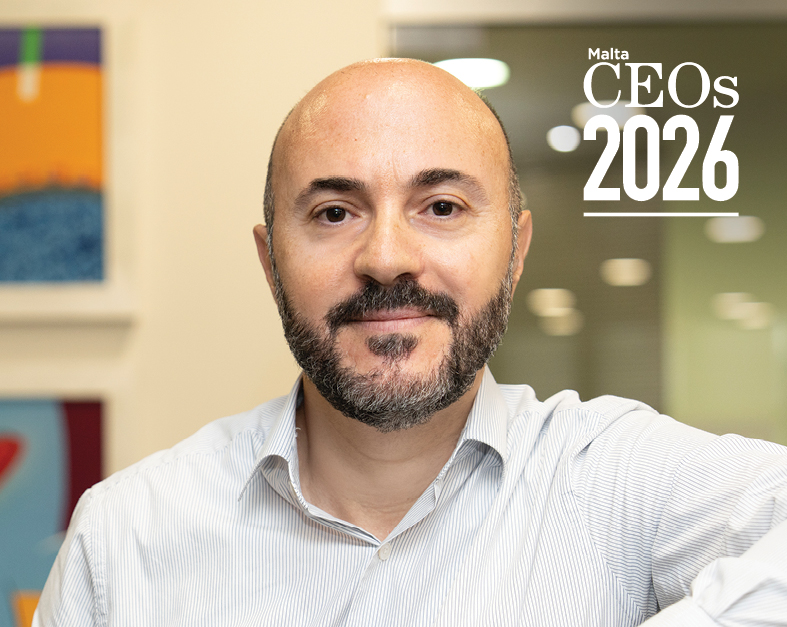
Alistair Mangion, CEO of Computime, promotes a people-first culture that keeps staff turnover below 10 per cent in Malta’s competitive tech sector. With six consecutive years of record profits, a recent IPO and an average employee tenure of seven years, Alistair demonstrates that trust, flexibility and shared success are not just ethical imperatives but powerful drivers of business performance in an industry where talent is the scarcest resource.
For Alistair Mangion, CEO of Computime, sustainable performance starts with values – above all, trust. Long before COVID-19, the company adopted a remote-first approach that gives employees the freedom to work how and where they are most productive. “It’s all about respecting and trusting them,” Alistair says. “You can’t constantly question whether people are actually putting in their hours when they’re working from home. If you take that approach, the concept doesn’t work.”
With around 110 employees, almost everyone at Computime has their own working model. “We manage by objectives and I insist managers do the same,” Alistair explains. The results speak for themselves: staff turnover sits below 10 per cent – impressive in Malta’s competitive tech sector – and the average employee tenure stands at seven years.
Retention matters in a market where talent is scarce. Information technology (IT) courses at Maltese tertiary education institutions produce few graduates – some programmes yield just 10 qualified candidates annually – in an industry with dozens of competing employers. “Demand far exceeds supply,” Alistair observes. Computime has responded by investing in university programmes and building its employer brand with students years before they graduate.
Transparency is taken seriously, too. Computime publishes employee engagement scores in its annual report – something Alistair wishes more companies would do. “Employee engagement is a key indicator of future success,” he points out. “Imagine two companies with identical financial results. One invests in their people and keeps them engaged. The other has high turnover. The difference will become apparent in their future performance.”
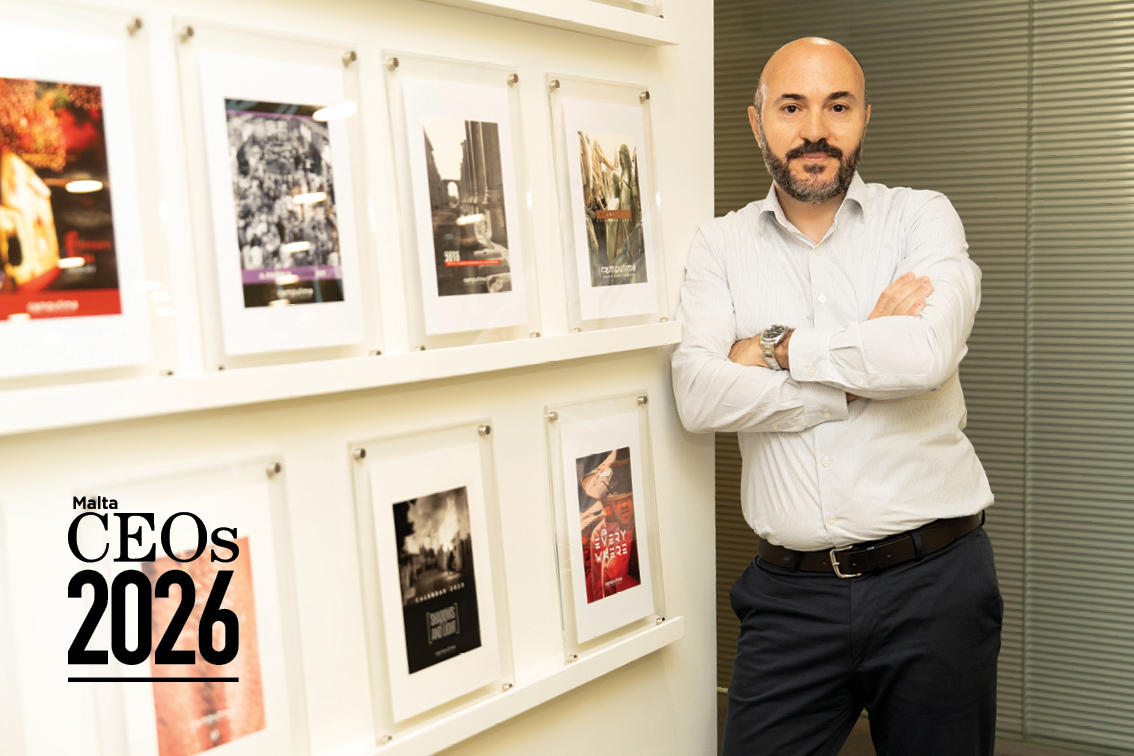
Even so, flexibility alone is not enough. “I think about success as something shared,” he says. “If the company is doing well but employees aren’t happy, that’s not real achievement. I want employees sharing financially as well. As we grow, we give more flexibility, more money and we make them shareholders. Seeing them participate is very important.”
Alistair believes in a culture where failure is part of learning. “Mistakes, bad decisions, wrong judgement calls – that’s all very natural,” he asserts. “As I tell my team, especially the junior members: mistakes happen, just make sure you learn from them.” In technology, where experimentation often precedes breakthroughs, that mindset matters. “Every failure is an opportunity to make an adjustment that improves your chances going forward.”
This philosophy delivers results. Computime’s six consecutive years of record profits reflect both the strength of this people-first approach and accumulated expertise. Founded in 1979, the company has spent 46 years building deep capability in enterprise IT, serving Malta’s major banks, Government departments and large corporations with everything from network infrastructure and cybersecurity to custom software applications.
The leadership team’s longevity at the top reinforces this stability. “Our current executive team has been with the company for more than 20 years. We know the business very well,” Alistair says. “We make better decisions and better investments now.” Yet success cannot breed complacency. “Our target is always to beat the previous year by a certain percentage. Matching last year’s performance, even though it was strong, wouldn’t be good enough.”
Long-term thinking sits at the core of Alistair’s leadership. “A leader has to create space for strategic thinking; it doesn’t just come naturally,” he explains. “People are always focused on this week or the next. You have to carve out dedicated time for them to think about innovation.” Alistair’s role, as he sees it, is to be “an organiser and facilitator, making sure the team is aligned and moving ahead united behind our objectives.” A ‘meet-the-CEO’ programme, where Alistair sits down with up to five employees each week, keeps him connected across all levels. “I want to know what’s happening from people on all fronts, not only managers or executives,” he says.
The company ring-fences dedicated resources for research and development, balancing its commitment to core operations with ongoing investment in future growth. “Today we’re building what we’re going to sell in two years’ time,” Alistair reveals, explaining that customer feedback heavily shapes the innovation process. “It’s about understanding what clients are going through and adapting our products to meet their future needs.”
Computime also tracks what major global tech companies are developing. For some products, it competes internationally by focusing on carefully selected niche markets; in others, being first to market locally captures significant opportunity. The approach requires investment – people working full-time on building products that will not generate immediate revenue but are essential for sustained growth.
Among the opportunities ahead, artificial intelligence (AI) stands out. “Compared to big economies like the US or the UK, AI adoption in Malta is still in its infancy,” highlights Alistair. “I’m expecting significant growth in the local tech sector over the next five to 10 years, driven mainly by AI, cybersecurity and robotics.”
He views the emergence of AI as a once-in-a-lifetime transformation. “These sorts of transformations don’t happen every day. They happen every 50 years, and they open up a lot of opportunities,” he remarks. But capitalising on AI requires the right mindset. “It’s not about replacing people; it’s about helping businesses grow faster.”
Business and political leaders, he urges, should think about AI’s impact in 10 or 20 years’ time and start adapting now. “The world is going to change, there’s no doubt. We can’t just focus on the money and growth potential,” he warns. “It’s up to us to set parameters and guidelines now, while we’re still in control. AI has the potential to impact political and social systems. People could lose their livelihoods.”
Computime has a dedicated business line building AI agents and applications, yet Alistair remains steady about the pace of change. “I believe in constant and disciplined evolution, not revolution. By making improvements gradually, we can always course-correct. With revolutionary change, mistakes become problems. With incremental change, they’re easy to fix.”
Following Computime’s IPO last year – Malta’s only equity IPO in the past three years – Alistair is focused on delivering value to the company’s new shareholder base. Looking to 2026 and beyond, he sees international expansion as essential to maintaining double-digit growth. “Malta offers solid opportunities, but sustained growth and strong investor returns require international success,” he says. For Maltese equity investors, the company offers a diversified IT portfolio spanning 11 business lines across software, cybersecurity, AI, enterprise resource planning, and IT infrastructure. “Buying shares in Computime is like buying a share in a tech fund.”
Nevertheless, delivering returns to investors is only part of the picture. “It’s not only about money,” he stresses. “If you’re growing at the expense of the environment or people’s standard of living, it’s not fair.” True achievement, in Alistair’s view, means sharing the gains. “We must make sure that, first of all, we’re respecting the environment,” he urges fellow leaders, “then the rewards need to be shared with customers, investors and employees.”
This article is part of the serialisation of 50 interviews featured in MaltaCEOs 2026 – the sister brand to MaltaCEOs.mt and an annual high-end publication bringing together some of the country’s most influential business leaders.

‘Greed harms businesses more than anything else’ – Wolfgang Tweraser
The TW Consulting & Trade Ltd CEO believes Malta has much more to offer: ‘It could be like a little ...
‘We can’t promote tourism without agriculture’ – Malta Food Agency CEO Brian Vella
‘I envision having fewer farmers, but more productive ones.’
‘Not everything can be taught through textbooks’ – MUHC CEO Chris Schinas
‘I see my role as using the university’s name, its facilities and its resources to build a successful commercial arm.’
‘Retention is the new recruitment’ – HR Plus Managing Director Adrian Buttigieg
‘Starting from the ground up teaches you to value every team player.’
