

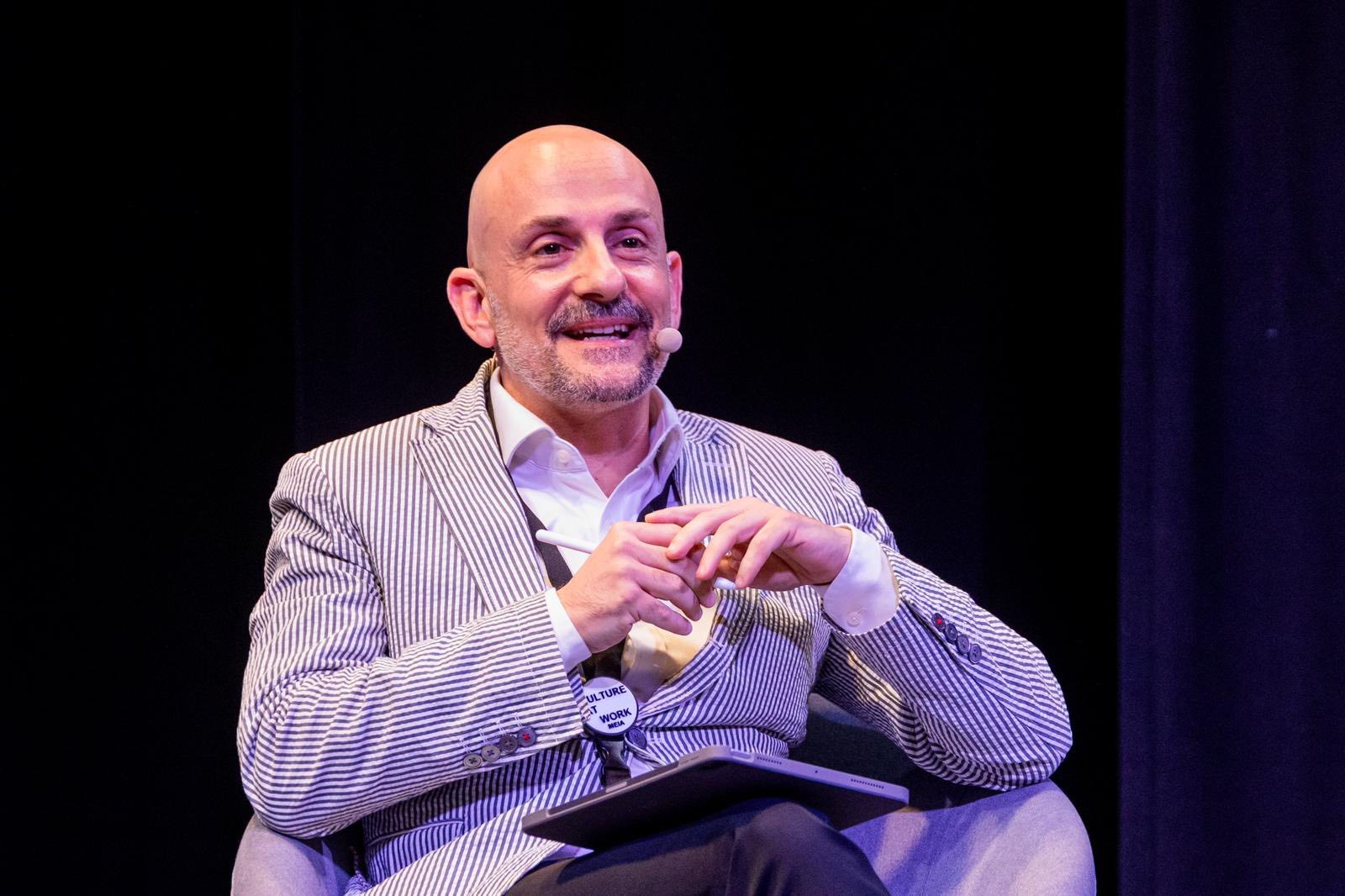
For Toni Attard, working in culture has never been about choosing between creativity and structure. It has been about insisting that the two must coexist. As founder and director of Culture Venture, Mr Attard operates at the intersection of research, policy, and practice, advising governments, cultural agencies, and arts organisations on how to develop long-term, sustainable cultural strategies. At the same time, he remains deeply embedded in production, leading Udjenza, an arts production house with a growing international footprint.
“I wear many hats,” Mr Attard says, a phrase that feels less like a cliché and more like an operational necessity.
Culture Venture’s work spans research on artificial intelligence and artistic labour, city cultural mapping, international cultural relations, and strategic development for arts organisations at both national and international levels. Alongside this, Udjenza is developing three original productions for 2026, while continuing to scale projects that have already proven their durability.
“The Caravaggio Experience has now exceeded 100 performances at St John’s Co-Cathedral,” he notes, adding that long-running productions such as Valletta Resounds and Sailors in the City continue to attract international audiences.
This dual position, both analytical and hands-on, shapes how Mr Attard views progress. Reflecting on 2025, he speaks candidly about uncertainty and delay, particularly when working with original ideas that take time to mature. “The biggest lesson of 2025 has been perseverance paired with patience,” he says. “If you genuinely believe in an idea, you have to stay with it, nurture it, and allow it the time it needs to grow.”
That patience is not passive. Mr Attard places strong emphasis on co-creation and shared values, especially when navigating the inherent unpredictability of creative work. “I value working closely with artists and collaborators who share curiosity and a willingness to embrace uncertainty,” he explains.
Looking ahead, 2026 will be about transition, moving projects from development into public view. New research will be released, three productions will premiere, and Valletta Resounds will continue to expand.
Perhaps most significantly, Mr Attard is project-managing Bejn / The In-Between, Malta’s first national pavilion at the Gwangju Biennale. “Firsts are always challenging,” he admits, “but I’m drawn to start-ups and new cultural ground. That sense of building something from the ground up continues to both scare me and motivate me.”
In a sector often perceived as economically fragile, Mr Attard is clear-eyed about feasibility. He rejects the idea that the arts are uniquely precarious. “Every sector has its stress points, risks, and challenges,” he says. “Feasibility is not guaranteed in any industry; it depends on the models you build and the decisions you make.” The problem, he argues, lies not in artistic practice itself, but in how it is structured. Sustainability, for him, comes from diversification, audience understanding, and clear business models that remain aligned with artistic values.
He is particularly critical of the romanticisation of struggle in the arts. “There’s a deeply ingrained notion that artists cannot or shouldn’t earn properly from their work,” Mr Attard says. “Passion alone won’t pay the bills.” He is firm that artistic rights must include economic rights. “The right to practise art must include the right to earn a living from it,” he adds, stressing that sustainability is not a betrayal of integrity but a condition for its survival. “It’s about giving your work the conditions it needs to thrive.”
Few topics expose the tension between creativity and economics more sharply than artificial intelligence. Mr Attard is currently leading research into AI’s impact on artistic practice in Malta, combining an open survey with international desk research. “Whether we like it or not, AI is developing at an extraordinary pace,” he says.
While he acknowledges its creative potential, his concern lies with labour, authorship, and intellectual property. “Legislative frameworks move far more slowly than technological innovation,” he warns. “This imbalance leaves artists exposed at a time when their work is increasingly vulnerable to appropriation and misuse.”
Beyond policy and production, Mr Attard returns repeatedly to first principles: Why art matters at all.
For individuals, he describes the relationship as universal and deeply personal. “I have yet to meet a single person who does not, in some way, have a relationship with artistic expression,” he says, whether through joy, loss, healing, or memory. Attempts to rank or categorise art, he believes, risk misunderstanding its role. “Creativity is one of the defining characteristics of humankind. It is how we make sense of the world.”
In business, Mr Attard sees creativity not as an accessory but as a driver. “There is business in art and art in business,” he says, pointing to innovation, leadership, branding, and governance as areas where artistic thinking is increasingly valued. Artists, he notes, are now contributing to boardrooms, research environments, and health contexts. “Creativity is not an add-on,” he says. “It is a strategic asset.”
For those hoping to follow a similar path, Mr Attard is direct. “Most people in the arts will not apply for a job,” he tells his students. “They will have to create one.” That reality demands entrepreneurial thinking alongside artistic skill. “This requires resilience, adaptability, and a willingness to learn how to sustain your practice over time,” he says, adding that these skills are learned, not innate.
His closing advice is grounded rather than idealistic. Stay curious. Be patient. Collaborate generously. Accept that uncertainty is part of the process, but do not confuse uncertainty with lack of planning. “It may feel like a leap of faith,” he reflects, “but it doesn’t have to be blind.” With reflection, structure, and support, creativity can remain not a postponed dream, but a viable and evolving professional life.
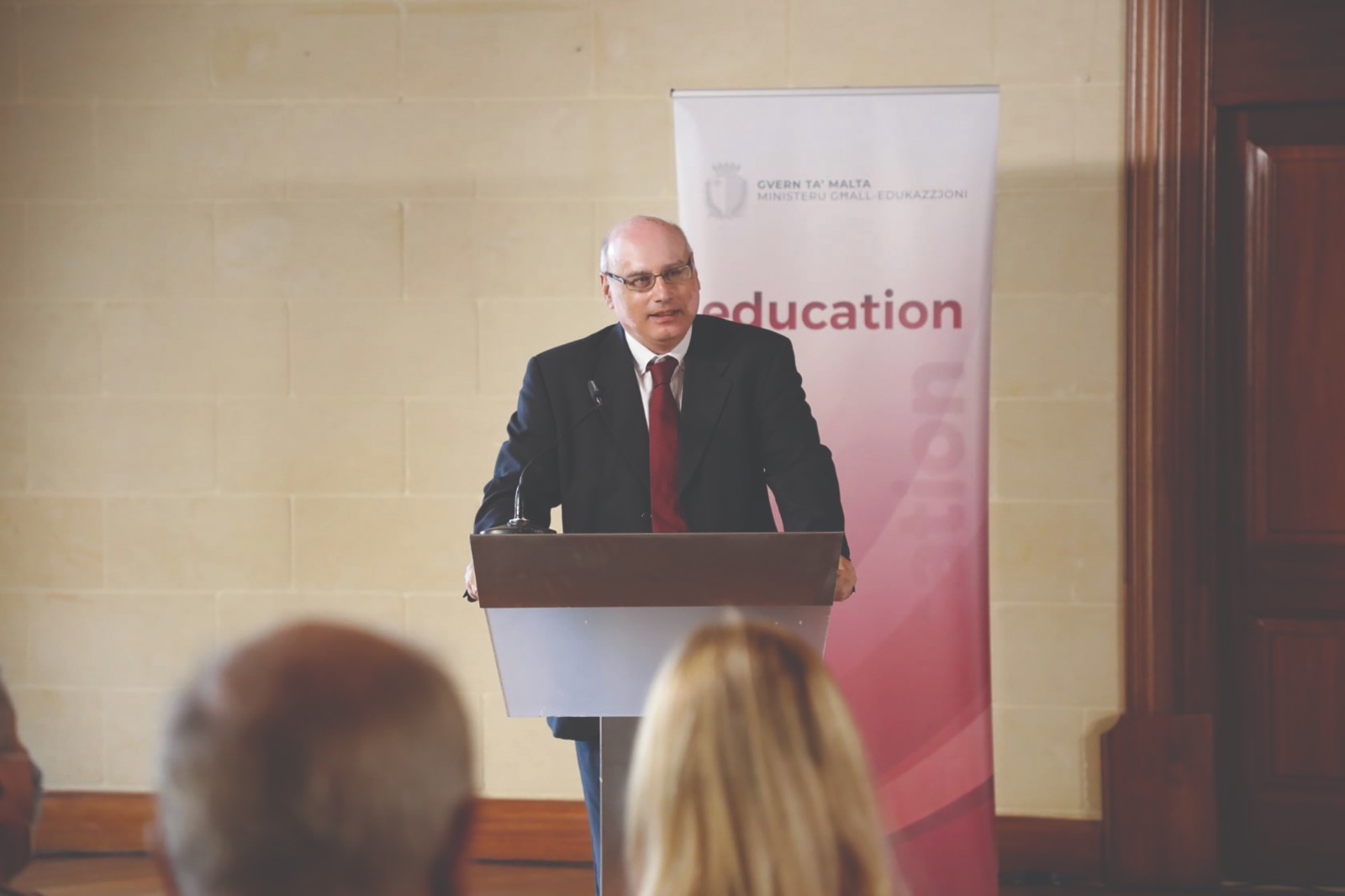
Image credit: MEIA
‘A real honour’ – Co-Founder of Bracket on securing Malta Venture Capital fund investment
The company has recently raised $7 million in seed funding.
Sean Gravina calls for ‘breathing space’ for Malta’s catering industry
His words come at a time where the industry is facing rising costs and tax concerns.
Corinthia and University of Malta launch Alfred Pisani PhD Scholarship
It aims to advance sustainable tourism research.
Gozo’s tourism success must not come at the cost of its identity, GTA Chairman warns
The Chairman acknowledged the positive performance achieved in 2025 but stressed that growth must be balanced with preservation.
