


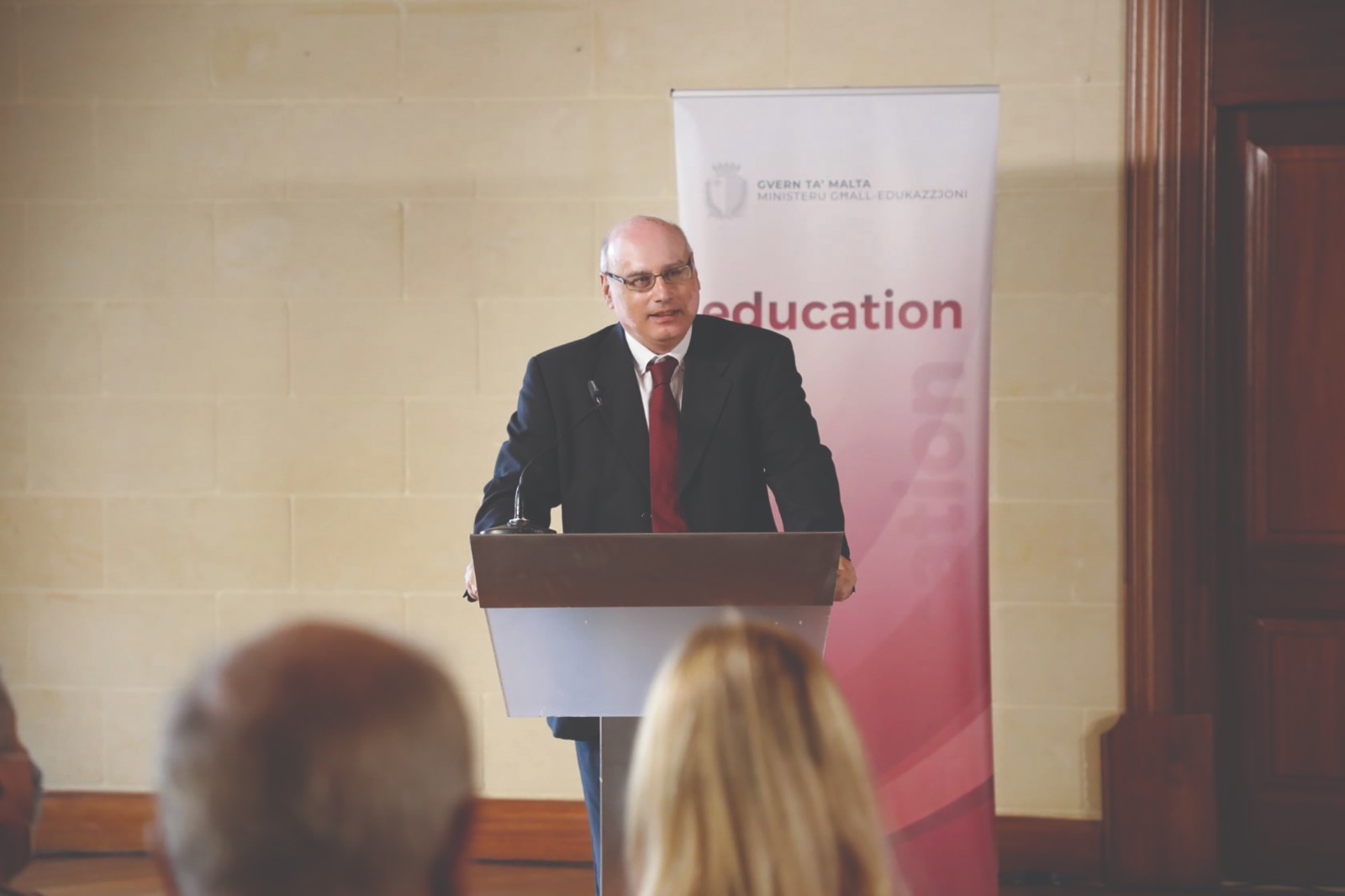
Maltese workplaces are “nowhere close” to being structurally prepared to move to a four-day workweek, according to economist Professor Philip von Brockdorff, who believes the efforts required for such a shift are better spent on “more pressing issues” facing the country.
The idea has been thrust into the national conversation since being suggested by both the General Workers Union and the Nationalist Party – two forces that do not often find themselves in alignment.
Both the GWU and the PN have called for a pilot project to determine its feasibility.
The idea has been dismissed by Finance Minister Clyde Caruana, who argues that such a move would require a major increase in productivity.
Prof. von Brockdorff points out that such a productivity boost can only be achieved if “both management and employees agree on a structured and carefully planned work method supported by innovative work practices and technology.”
“In my view, we are nowhere close to that in either the private or public sector,” he tells MaltaCEOs.mt, noting that employers “may be reluctant” to invest time and money into such innovative work practices.
Therefore, “it is not surprising either that Malta Employers has expressed reservations about reducing working hours.”
The employers’ lobby has been vociferous in its opposition to shorter working hours, with a survey conducted among its members finding that 58 per cent believe that a four-day workweek is not suitable for Malta at this stage.
A slight majority of survey respondents also said they feared that shortening the standard workweek would lead to lower productivity or higher operating costs, “particularly in sectors that rely on continuous service or shift work.”
What exactly is a ‘four-day workweek?’
Much depends, however, on the precise definition of the four-day workweek. While much of the local conversation has been about a straightforward additional one-day shutdown – such as having Fridays off – international examples of its real-world implementation reveal a far broader array of possibilities.
An experiment conducted with 61 companies with 2,900 workers over six months in 2022 in the UK allowed participating firms to design models that suited their operations.
Some closed entirely on Fridays (“fifth day stoppage”), while others used staggered schedules or performance-linked conditions.
“Resisting the idea that the four-day week must be one-size-fits-all was key,” the report noted, with firms qualifying as long as they maintained pay at 100 per cent and gave employees a “meaningful” reduction in work time.
For instance, a video game studio opted for everyone taking Fridays off to aid collaboration, while a marketing agency alternated between Mondays and Fridays off to ensure client coverage.
Notably, another firm adopted a decentralised model requiring each department to agree to a set of KPIs that would need to be met to retain the four-day week. This meant that some departments and individuals entered the pilot later than others, and some were suspended from the four-day week during the 6-month pilot period.
The results of the pilot were striking, with 92 per cent of participating companies deciding to continue with the model after the trial, staff turnover falling by 57 per cent, and sick days dropping by 65 per cent. Employees also registered significant improvements in their mental wellbeing, with 40 per cent reporting lower stress levels and 71 per cent saying they felt less burnt out.
Commenting on the study, Prof. von Brockdorff says: “I am not surprised that reduced working hours can lead to increased employee well-being and improved focus and efficiency. There is other research that also confirms such conclusions.”
Could it serve as a recruitment advantage?
While noting that “we need to keep in mind the context of such conclusions,” the economist points to two cohorts that could see an outsized benefit from shorter hours.
“We all need to keep in mind that our workforce is ageing and a reduced working week could help reduce fatigue and burnout, which helps an ageing workforce return to work with more energy and focus,” he says.
“A reduced working week would also help young families with raising children and therefore an improved work-life balance.”
In a recruitment landscape where recruitment challenges and talent shortages dominate employer concerns, the ability to offer shorter hours could give companies an important edge.
Prof. von Brockdorff concludes: “Any attempt to introduce a four-day working week must be done gradually, allowing time for businesses and the public sector to re-engineer their working methods and practices to boost productivity.
“This needs to be done in an economy still heavily reliant on labour input and where, in a number of sectors, measuring productivity is not supported by scientific or objective methods of assessment.”
Whether it is the right time for businesses to focus their attention on such a project, however, is debatable: “It will need to weigh both the economic benefits and costs, and I believe that at this moment in time the economy is facing more pressing issues such as re-jigging our growth model to make it more sustainable and more productive.”


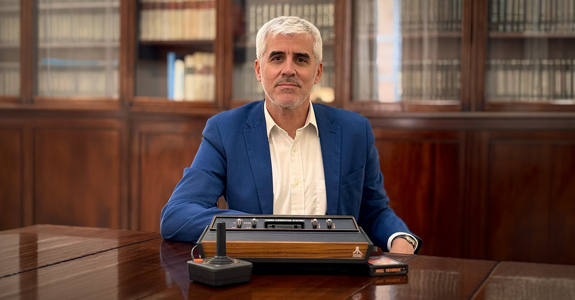
Fenech & Fenech Advocates appoints Antonio Ghio as Chief Innovation and Technology Officer
Antonio Ghio is an IT Law expert and has been with the firm for the past 25 years.
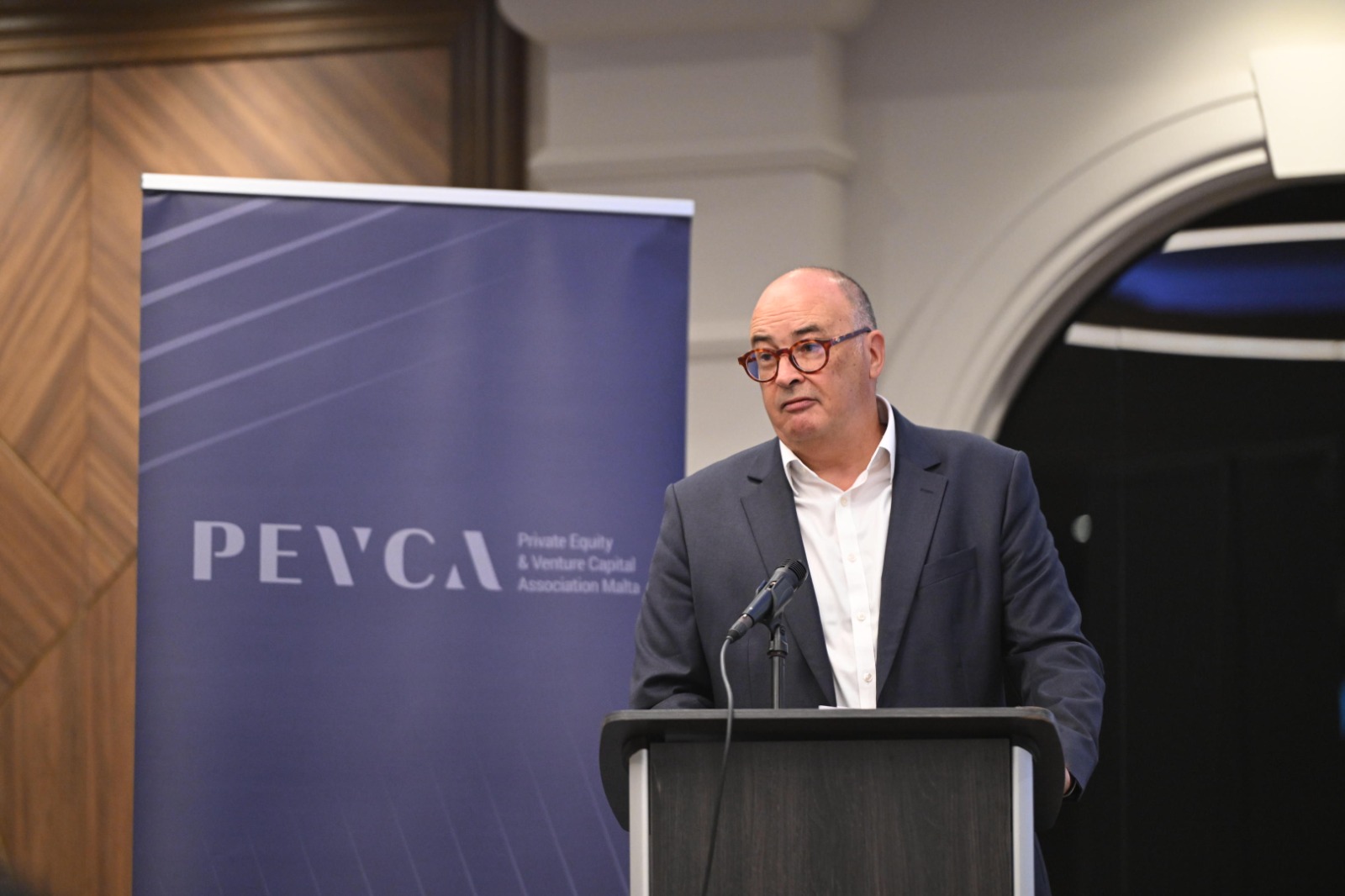
‘Considerable potential’ for Malta to develop as a private equity and venture capital hub – PEVCA head
He said that private equity and venture capital play a vital role in modern, innovation-driven economies.

Nancy Pavlaki appointed Chief Financial Officer at Ramla Bay Resort
Prior to taking up the post, she worked in a number of financial positions in the hospitality industry.

Kyle Antoni Pace Cumbo appointed Chief Commercial Officer at Iniala
'I’m incredibly excited about what comes next,' he said.
