


Serving on the board of a founder-led business requires a different mindset, one that goes beyond technical governance and into understanding the human dynamics that shape the organisation.
At the centre of every founder-led business is a vision. The founder has built the company from the ground up, often navigating uncertainty, making decisions instinctively and moving quickly without the constraints of formal structures. Their way of operating is shaped by experience, resilience and an ability to act decisively in the moment. This is not only how the business was created, but also how it survived and grew.
It is precisely this modus operandi that makes governance both necessary and, at times, difficult to introduce.
From a founder’s perspective, governance structures can feel misaligned with the pace and agility that initially drove success. Rules, reporting, compliance and structured decision-making may be perceived as restrictive or even as a distraction from what truly matters: building the business. Board meetings can be seen as time-consuming, particularly when the founder is used to making decisions quickly and independently.
This is where the role of a non-executive director becomes critical.
To add value, a board member must first understand and empathise with the founder’s journey. Without this understanding, governance risks becoming an imposed framework rather than a supportive one. Effective board members take the time to align themselves with the founder’s vision, to understand the motivations behind decisions and to appreciate the challenges that come with leading from the front.
However, empathy alone is not enough.
The role of the board is not to replicate the founder’s approach, but to complement it. Governance introduces discipline where there may be informality, structure where there may be instinct and perspective where there may be proximity. The objective is not to replace the founder’s way of operating, but to support it in a way that enables the business to scale sustainably.
This requires a careful balance.
On one hand, the board must ensure that the organisation has the necessary structures in place. This includes clear processes, accountability, compliance and a framework for decision-making that supports long-term stability. On the other hand, it must avoid overwhelming the founder with unnecessary detail or rigid systems that slow down progress.
The most effective boards operate as partners rather than overseers.
They guide without controlling, challenge without constraining and support without diluting the founder’s vision. They create an environment where governance becomes an enabler rather than an obstacle, helping the founder transition from operating instinctively to leading with both intuition and structure.
Ultimately, the goal is alignment.
When governance is introduced with empathy and intention, it does not stifle the founder’s entrepreneurial spirit. Instead, it strengthens it. It provides the foundations needed for the business to grow beyond its early stages, ensuring that vision is supported by structure and that ambition is matched by sustainability.
In founder-led businesses, value is created not by choosing between vision and governance, but by bringing the two together in a way that allows both to thrive.



Nathan Farrugia and Mireille Muscat set up leadership peer network
'Leadership can become surprisingly isolating long before someone reaches the C-suite'.
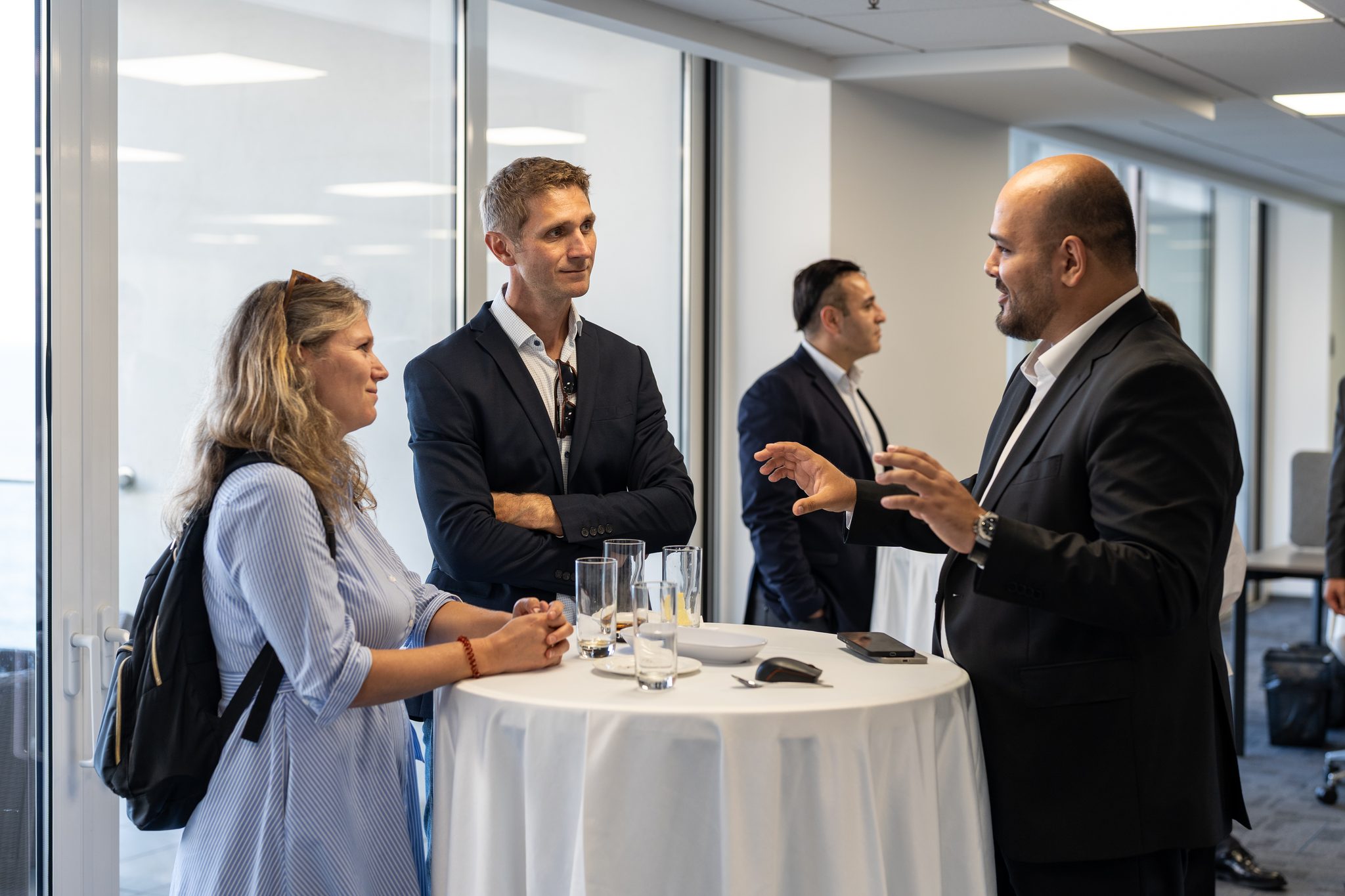
Alkagesta’s banking summit in Malta draws partners from across Europe’s financial centers
The gathering reflected the scale of the company's global ambitions and the growing confidence of the international financial community in ...

Six workforce indicators every CEO should be tracking
Workforce data can offer CEOs an early indication of emerging business challenges.

Silvano Azzopardi appointed to Board of Directors of Global Legal Entity Identifier Foundation
GLEIF had been set up and tasked with developing a universal identifier for legal entities involved in financial transactions.
