


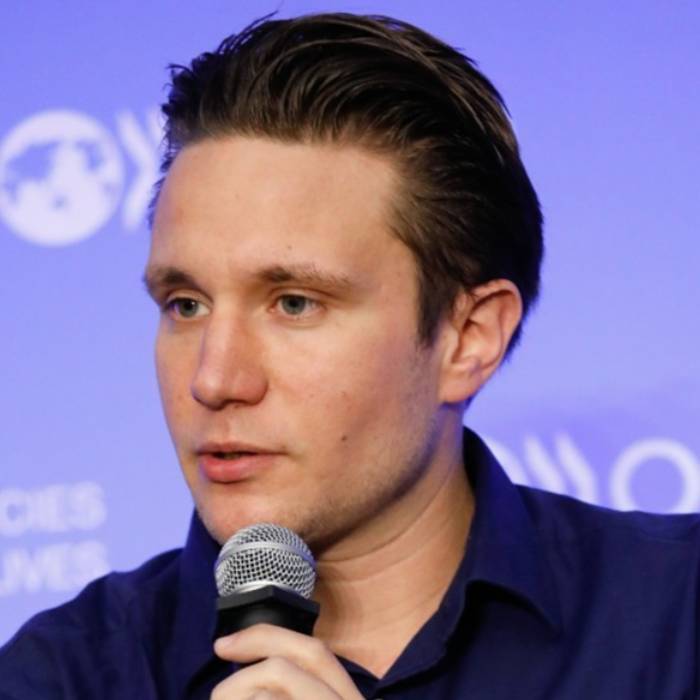
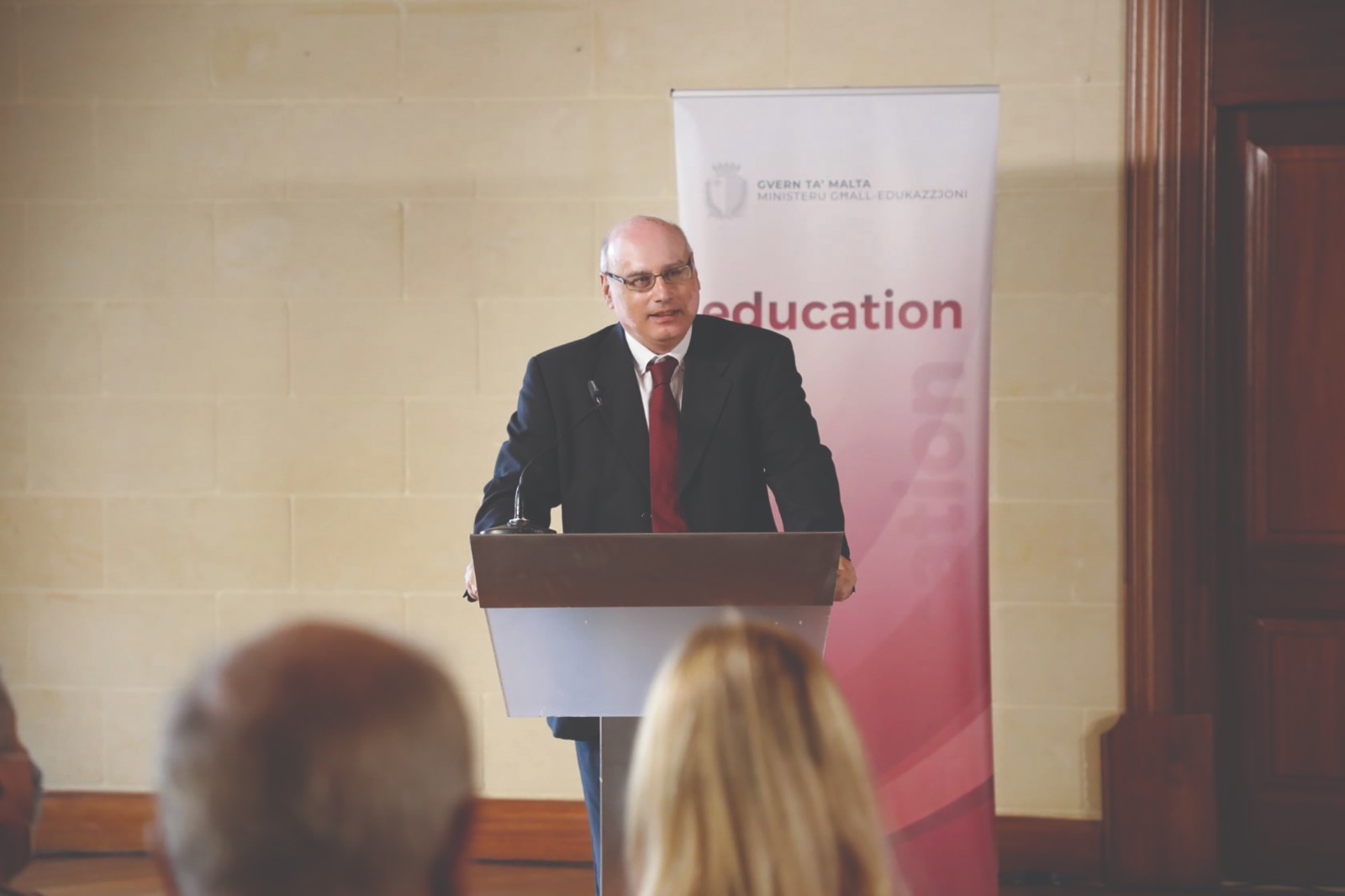
At the Cohort 5.0 Demo Day on Monday, SuperCharger Ventures Co-founder Janos Barberis delivered a stark message to Malta’s startup and business community: society is underestimating the scale and speed of the transformation driven by artificial intelligence.
Speaking at the Malta Society of Arts in Valletta, Dr Barberis warned the audience that while many compare AI to previous technological shifts such as the internet or electricity, “that is a mistake.” According to him, what is unfolding is not merely another wave of disruption, but a historic turning point that risks making human labour – and even human agency – obsolete.
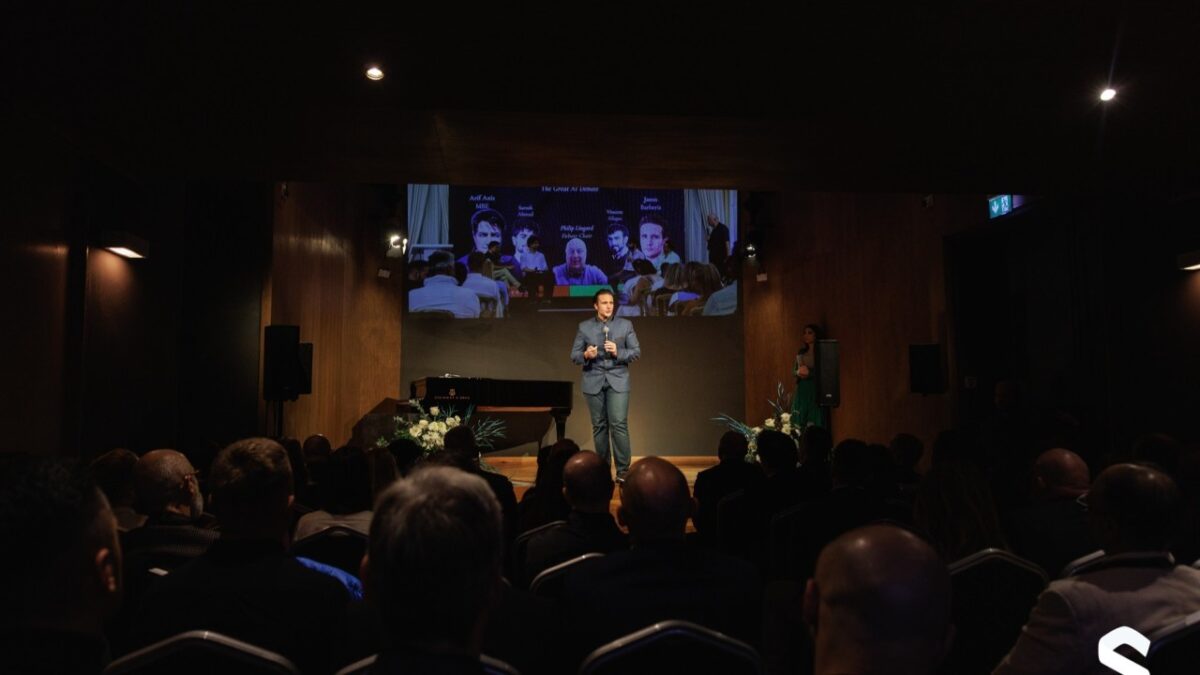
Dr Barberis opened by challenging the instinct to interpret AI through familiar patterns. People look in the “rearview mirror”, he said, and fail to recognise that exponential technologies do not move at human intuitive speed. To illustrate, he compared linear steps with exponential ones – and noted that in an exponential progression, “by step 30, I have gone to the moon and back twice.”
This, he stressed, is the pace at which AI systems are advancing. Computing power used to train leading models is reportedly increasing by a factor of 10 every six months – a rate he described as “several orders of magnitude faster than biological evolution.”
Meanwhile, education systems still take 20 years to form a worker. “Latency,” he argued, is the true danger. “If AI doubles every 6 months, and our update cycle… is 20 years you have a massive mismatch,” he told attendees. “The math says: If we don’t fix this mismatch, humans become irrelevant.”
Dr Barberis acknowledged he once believed AI itself was dangerous. But his view has evolved. “Ignorance is dangerous. Latency is dangerous,” he said, adding that the real threat is society’s slow reaction to a technology moving exponentially faster than any human institution.
He referenced Elon Musk’s recent remarks suggesting that work could become optional within two decades. While Dr Barberis does not position himself as a futurist, he said the point is not Musk’s exact prediction, but the necessity of forming – and acting upon – one’s own conclusions.
“We don’t have the luxury to be observers anymore,” he said. “We need to act.”
The data
Throughout the keynote, Dr Barberis pointed to accelerating economic signals. One chart, he noted, shows that “it is cheaper to use silicon than neurons”, effectively creating a business model that “shorts” human intelligence.
Another illustrates a labour market that is being distorted, with the “wrong people” occupying the limited roles that remain. A third shows that early-stage companies, despite record funding, are hiring fewer people to do more work.
Startups, he said, have already internalised this new reality.
Why startups matter – and why Malta may play a role
While governments and large corporates struggle with slow decision cycles, Dr Barberis argued that only startups move at the necessary velocity. “Startups are the only vehicle efficient enough to iterate on this problem,” he said. They can run “thousands of experiments” to explore models for the future of education, work, and agency.
Accelerators, in his view, serve as “time machines” that bring founders “living in the future” back to teach the present. Since SuperCharger launched in Malta, Dr Barberis said they have received over 2,000 startup applications – or, as he put it, “2,000 experiments”.
He also suggested that Malta’s size could be a strategic advantage. Larger economies face “high latency” in policymaking, but a small nation can move faster and adapt sooner.
Three pillars Malta must prioritise: education, work, entrepreneurship
Dr Barberis outlined three areas where innovation is urgently needed:
1. Education
The current system, he argued, is incompatible with the world children are entering. “We are sending kids to schools designed in the 1800s, for jobs from the 1900s, to live in the 2020s,” he said.
Humans should no longer be trained as “hard drives”. Competing with AI on memory is futile. Education must shift from “Retention” to “Direction” – teaching people how to steer, curate, and evaluate information rather than store it.
2. Work
The future, he said, is not employment but “deployment.” Rather than trying to replace workers, startups should build tools analogous to “Iron Man suits”, augmenting human bandwidth.
“We need founders who are building the control layer for the AI age,” he noted.
3. Entrepreneurship
Entrepreneurship, Dr Barberis argued, will become society’s most important survival mechanism. In a fast-changing environment, agency becomes essential.
“An employee waits for instructions. An algorithm waits for a prompt. A Founder creates the solution,” he said. In the AI era, entrepreneurship is not a profession – “it is a mechanism to be future proof.”
Dr Barberis described accelerators as “high-velocity particle colliders” where founders, investors and problems converge at speed. The objective is to create new, stable solutions – and to repeat the process rapidly.
“In this collision course with AI, we must accelerate not slow down,” he said. From a first-principles perspective, he argued, “the only way to decelerate the probability of obsolescence of humans is to accelerate the capability to adopt innovation.”
This moment, Dr Barberis said, is a window of opportunity, even if the odds of success are low. “Worst case? We failed but won’t have the regret of trying… Likely scenario? We buy ourselves time… Best case? We changed course and stirred away from what we feared.”
But time, he warned, is tight. “We don’t have 20 years. We barely have 20 months.”
Turning to the 20 presenting startups, he encouraged the audience to pay close attention: “They have a plan.”
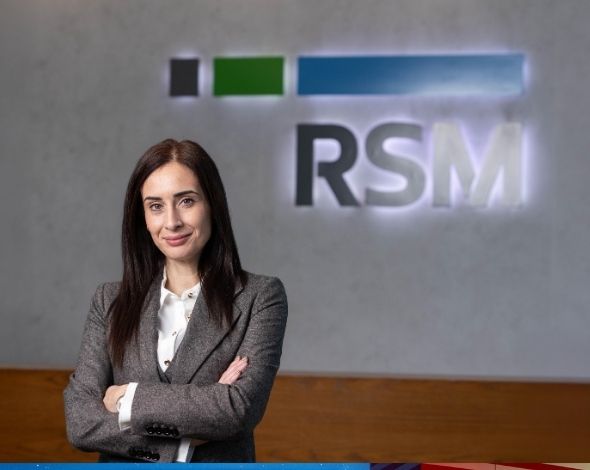
Charlene Baldacchino is RSM Malta’s new Director for Audit and Assurance
Charlene Baldacchino has over 18 years of experience in external auditing.

Only 8% of executives say HR is strategically embedded in their organisations
While HR leaders continue to focus on employee experience, talent attraction and HR technology, executives are increasingly prioritising initiatives that ...

MPC well placed to seize advantage in Malta’s ever-changing office space market, says CEO
Mohsin Majid touted the company’s ‘excellent clients’, with telecom operators and the Government representing the vast majority of revenues.
Winston Zahra appointed to HV Hospitality’s Board of Directors
He is one of several additions meant to strengthen the company’s leadership and governance.
