



In the first post of this series, I wrote about how easy it is to feel motivated in January, and how misleading that feeling can be. Energy is high, intentions are good, and everything feels possible. Experience has taught me that if you want to move forward consistently, motivation alone is not enough. You need a data-driven approach to how goals are set and pursued.
In the second post, I explored what happens when that early motivation begins to fade. Routines get disrupted, pressure builds, and life starts pushing back. That is usually the point where we assume something has gone wrong. I also argued that employers have a crucial role to play in supporting employees to reach their personal goals, and that doing so makes economic sense for organisations as well. At its core, this is what a Human-First Leadership approach looks like in practice.
This third post is about the reality check that comes next, and why February matters more than January ever will.
January is easy. February is honest. We have all learned this the hard way.
Every year, I see the same pattern repeat itself in myself, in the people around me, and inside the organisations I work with. At the start of the year, goals are set with good intentions. Plans look solid on paper. Then February arrives.
Reality shows up. Motivation drops. Life gets busy.
So let me ask you something.
How many goals or resolutions did you set in January?
And how many of them are you still pursuing today with the same consistency you expected just a few weeks ago?
If that question makes you uncomfortable, you are not alone. Research consistently shows that around 23% of people abandon their New Year’s resolutions within the first week, and roughly 40 – 45% give up by the end of January. By early February, as many as 80% of resolutions have already been broken, and only about 9% of people follow through in the longer term.
What I have learned is that most people do not fail because they lack ambition or discipline. They fail because the goals they set were never designed to survive real life. Bad weeks, competing priorities, low energy, and imperfect days are not exceptions. They are the norm.
Over the years, I have seen personal habits quietly fade, work initiatives lose momentum, and leadership commitments weaken the moment things become inconvenient. I have also seen the opposite. Small, well-designed habits and systems that continue to work long after motivation disappears. That contrast is what led me to a belief I now trust deeply. Motivation is unreliable. Data-driven systems are not.
At a personal level
In the first post, I questioned the way we set goals. In the second, I focused on what happens when routine is disrupted. What February reveals is which habits were actually designed for bad weeks.
One example from my own life is how I approach learning and skill development. I used to set outcome-based goals such as completing a course or mastering a new topic within a fixed timeframe. As soon as work intensified or priorities shifted, those goals quietly fell away.
What stuck was redesigning the system. Instead of focusing on completion, I committed to a short, repeatable learning block built into my week. Not perfection. Not speed. Just consistency. When I miss a session, I do not restart the following week. I simply continue. That small design change made the difference between stopping altogether and making steady progress over time.
To reinforce this, I also measure progress in a simple way. Each completed learning block is marked and tracked, creating a feedback loop that shows whether I am moving forward, even when progress feels slow.
Ask yourself honestly. Is this habit small enough to continue when energy is low? What happens when you miss a day? Do you give up entirely, or can the habit absorb imperfection? Is this goal connected to who you want to become, or are you relying on willpower to force it through?
The habits that survive are not perfect. They are flexible. They leave room for being human.
At a leadership level
Earlier in the series, I touched on leadership promises and intentions. February is where those promises are tested.
When deadlines stack up and pressure rises, does flexibility still exist? Does support quietly disappear when results matter most? When someone struggles, do you redesign the environment, or default to blaming the individual?
Leadership often feels easiest when things are calm. It is much harder, and far more revealing, when the system is under strain. What survives February is what leaders truly believe, not what they say when conditions are ideal.
February is also a good moment for leaders to pause and reflect. What goals, ambitions, or commitments made to your people in January have already drifted? And what does that tell you about the systems you have designed?
At an organisational level
The same is true for culture. Culture is not what appears in January town halls or strategy decks. It is what holds when targets slip.
When pressure rises, what is the first thing that gets cut? Is learning time still protected when delivery becomes tight? Do wellbeing policies survive being tested, or are they only talked about?
My message is simple. You do not need more motivation. You need data-driven systems that still work on hard days. Leaders do not need better slogans. They need environments that support people even when it becomes uncomfortable to do so. Organisations do not need louder goals. They need better design. Design that can be measured consistently, improved deliberately, and that continues to hold once the year stops being ideal.
If January has already slipped for you, that does not mean you have failed. It means you now have better information. Restarting in February is not weakness. It is maturity, and a step closer to becoming better through steady improvement over time.
I hope these three posts genuinely help you become a better version of yourself. I hope that eleven months from now you look back and feel proud of the effort you put into changing what truly matters and improving what needed improvement. That applies whether this is a personal goal you are working on, or whether you are a leader responsible for shaping an organisation and the people within it.
The New Year celebrations may be over, but nothing stops us from revisiting our goals, redesigning our approach, and building data-driven systems that actually help us change. February is not a failure point. It is about capturing and analysing what the data is telling us. And feedback, when taken seriously, is where real progress begins.



‘A necessary growing pain’: MIA CEO Alan Borg on airport expansion
He said the investment is necessary if MIA is to remain among Europe’s leading airports

BNF appoints new Chief Financial Officer and Chief Banking Officer
Nadia Miceli promoted to Chief Financial Officer, while Stewart Carvil appointed Chief Banking Officer
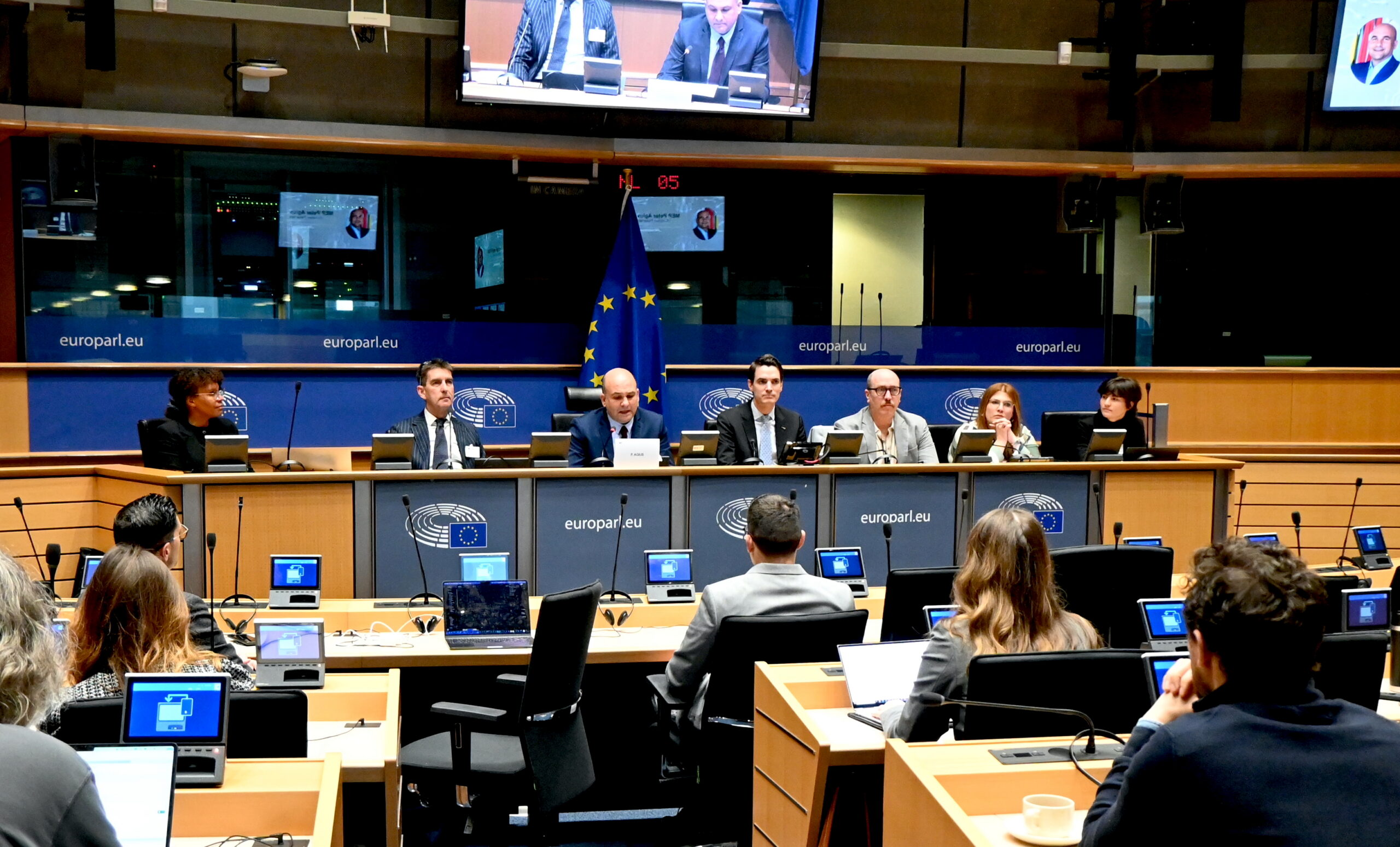
‘Cyber resilience isn’t about ticking boxes’: Malta and EU cybersecurity leaders convene in Brussels
Daniel Thompson-Yvetot, CEO of CrabNebula and co-founder of Comply.Land, warned that businesses risk being overwhelmed.

John Bonello Ghio appointed Chief Commercial Officer of Simonds Farsons Cisk
He has been tasked with driving growth across all commercial functions, strengthening market presence and leading brand and customer strategies.
