

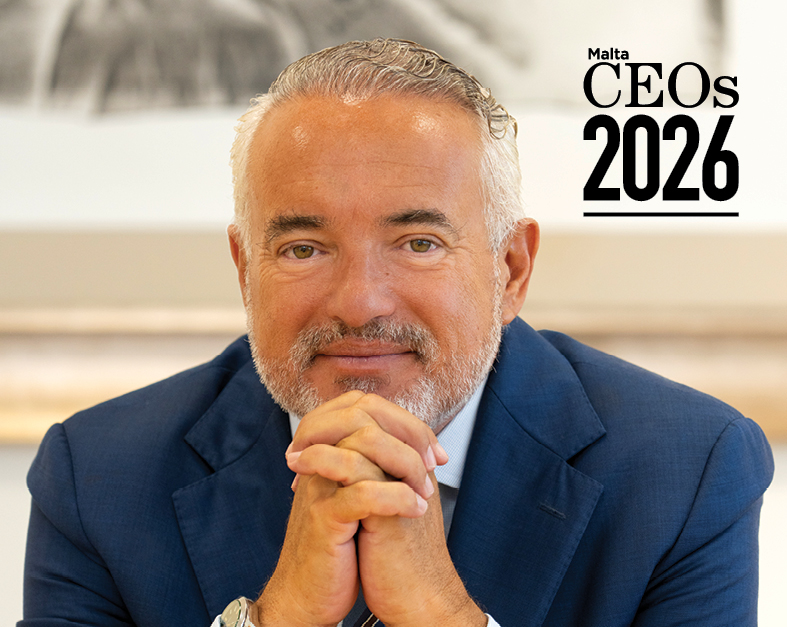
Albert Alsina set an ambitious goal to reach €1 billion in assets under management, and then surpassed it, establishing Mediterrania Capital Partners as a leader in African private equity. Now at the helm of a more geographically diverse firm, his focus for 2026 is on consolidating growth and proving that a purpose-driven investment model can deliver both top-tier returns and transformative social impact amid global volatility.
The past year has marked a fundamental transformation for Albert Alsina. Today, the Founder and CEO of Mediterrania Capital Partners heads a far more complex organisation than just a year ago, a shift that has reshaped his role. “My responsibilities cover a wider geographical scope,” Albert remarks. “We started with a few countries and now invest in over 30 across Africa, Southern Europe and the Middle East.”
Two key forces are driving this expansion: the deep integration of artificial intelligence (AI) and a strategic push to engage a broader investor base, stretching from Asia to the United States. “We have created a toolbox of AI applications that has allowed us to increase our assets under management without tremendously increasing our headcount,” he explains. “We are as much as 10 times more efficient and productive. It’s not an exaggeration to say that AI is changing our lives.”
As the enterprise has scaled, Albert’s leadership philosophy of empowerment has only grown stronger. “When you treat people as the professionals you want them to become, they rise to that expectation,” he asserts. “We try to empower our people with the seniority and responsibility we see for them five years down the line, and it’s working extremely well.” Together with a greater emphasis on listening, this approach has cultivated a high-performance culture that keeps Mediterrania Capital Partners consistently ranked in the top quartile of emerging market private equity firms worldwide.
With growth, however, comes challenges, particularly in talent management. “Malta offers a limited talent pool, and young professionals tend to move quickly,” he concedes, noting the lure of higher salaries in places like Dubai and Saudi Arabia. While targeted retention plans are in place, he admits it remains an ongoing concern.
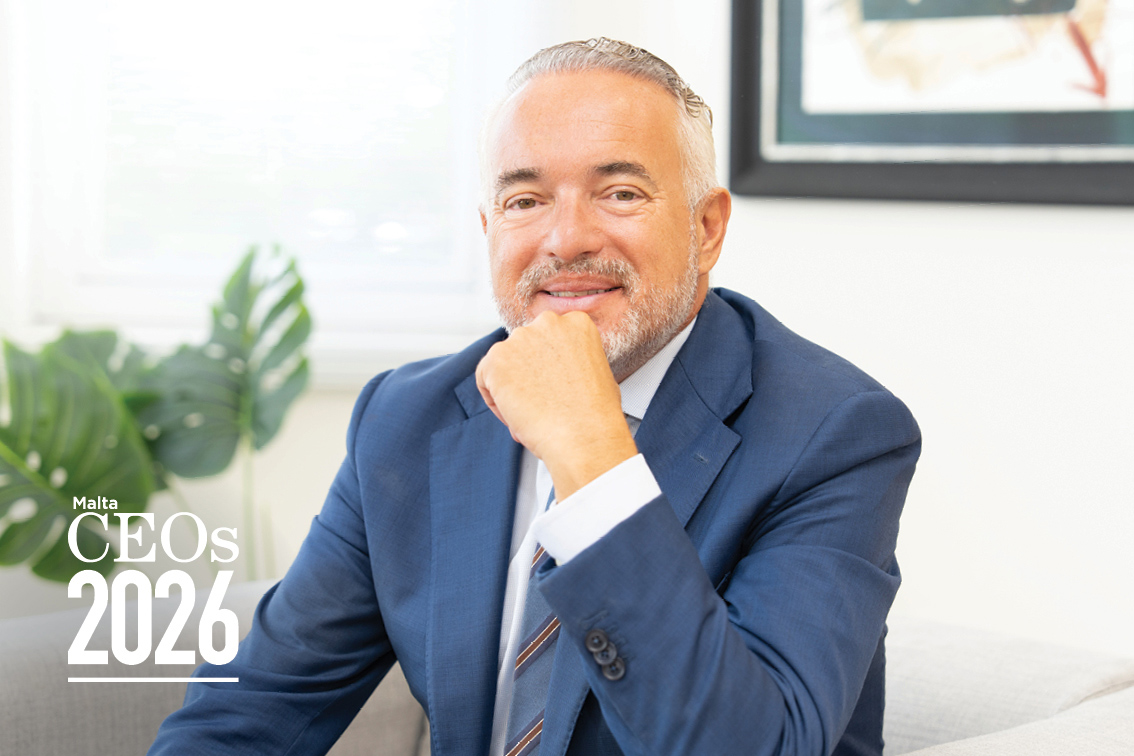
For Albert, this pressure reinforces the need for a strong sense of purpose, the centre of Mediterrania Capital Partners’ ethos. “When you drive an organisation with a well-articulated purpose, everything else falls into place,” he stresses. “Our purpose remains the soul of our business.” That perspective is expressed in what he calls ‘the Four Es’: Energy, Energising, Execution, and Edge – a framework that ensures every new hire aligns with a culture built on making a tangible impact as well as generating returns.
One of the clearest demonstrations of this dual focus is Akdital, Morocco’s largest private healthcare group. Mediterrania Capital Partners’ investment transformed the mid-sized company into a publicly listed ‘social unicorn’. Albert often shares this case study and its key lessons with his students at the EADA Business School in Barcelona, where he lectures as an Associate Professor.
“The biggest takeaway from Akdital is the power of combining an ambitious entrepreneur, an unmistakable market need and a smart financial investor,” Albert explains. Over five years, Mediterrania Capital Partners’ backing enabled Akdital to expand from five hospitals to over 45, increasing its capacity from 1,000 beds to nearly 4,000 and fundamentally changing North Africa’s healthcare landscape.
The financial results were equally striking. Revenues grew six-fold while profits rose twenty-fold, pushing the company’s valuation from €100 million to nearly €2 billion. A critical decision during the multi-stage divestment process was to separate hospital ownership from operations, a move that unlocked over €500 million from real estate investors, proving pivotal to value creation. As Albert notes, the success shows that “you don’t need to sacrifice purpose and impact for returns – or returns for impact and purpose.”
The Akdital exit, the largest in Mediterrania Capital Partners’ history, is definitive evidence of its proprietary eight-step Value Creation Model, which Albert details in his book Value Creation in Private Equity. Adaptable across sectors, the model moves from understanding the “guts of the business” to embedding a purpose-driven culture by mastering core strategic and HR processes, while tracking five key KPIs – profits, growth, cash, clients, and velocity – to enable rapid, data-driven adjustments.
Such results underpinned the firm’s fourth fund, MC IV, which closed in 2025 at a significantly oversubscribed €600 million. “It indicates that in a volatile global market, investors are looking for proven performance,” Albert observes. “But they are also increasingly pursuing ‘good returns’ – returns generated the right way. For instance, they feel proud to invest in the largest private hospital group in Africa.”
Mediterrania Capital Partners’ environmental, social and governance (ESG) strategy has likewise matured into a proactive ‘Theory of Change’. “Instead of investing and then seeing what Sustainable Development Goals (SDGs) we impact, we identify the SDGs we want to impact – like quality education or gender equality – and then seek investments that will achieve that goal,” Albert explains. The results speak for themselves: women now hold 40 per cent of management positions across the portfolio, and the organisation’s investments now touch the lives of an estimated 100 million Africans. “Another example is our implementation of software to centrally manage energy use across more than 500 supermarkets in Tunisia,” he adds.
Building on this momentum, Mediterrania Capital Partners recently launched the Africa Select Equity Fund (ASEF), a UCITS fund regulated by the Malta Financial Services Authority (MFSA). “The aim was to offer what our traditional private equity funds cannot: liquidity and accessibility,” Albert states. The fund, which accepts investments starting at €50,000, provides liquidity every 15 days and targets undervalued public companies where Mediterrania Capital Partners has deep insight. “Our strategy is to invest in 20 to 25 high-growth public companies where we know the management team well,” he says, highlighting the firm’s on-the-ground advantage. In its first year, the fund delivered a 47 per cent return.
Simultaneously, the team is advancing a ‘Spanish agenda’ in the agricultural sector, leveraging its deep experience in North Africa to capitalise on the interconnected cross-Mediterranean value chain. The move signals a broader strategic expansion, extending Mediterrania Capital Partners’ presence from Africa into the Middle East and Southern Europe.
Despite global uncertainty, 2025 was the most successful year in the business’ history. “We closed our flagship €600 million fund and have already committed 50 per cent of it, well ahead of schedule,” Albert reveals. Looking to 2026, the immediate focus is clear. “The word for the next six to nine months is consolidation,” he says. Beyond that, ambitions remain high: to grow towards €2 billion in assets under management and potentially add new products, such as a private debt fund.
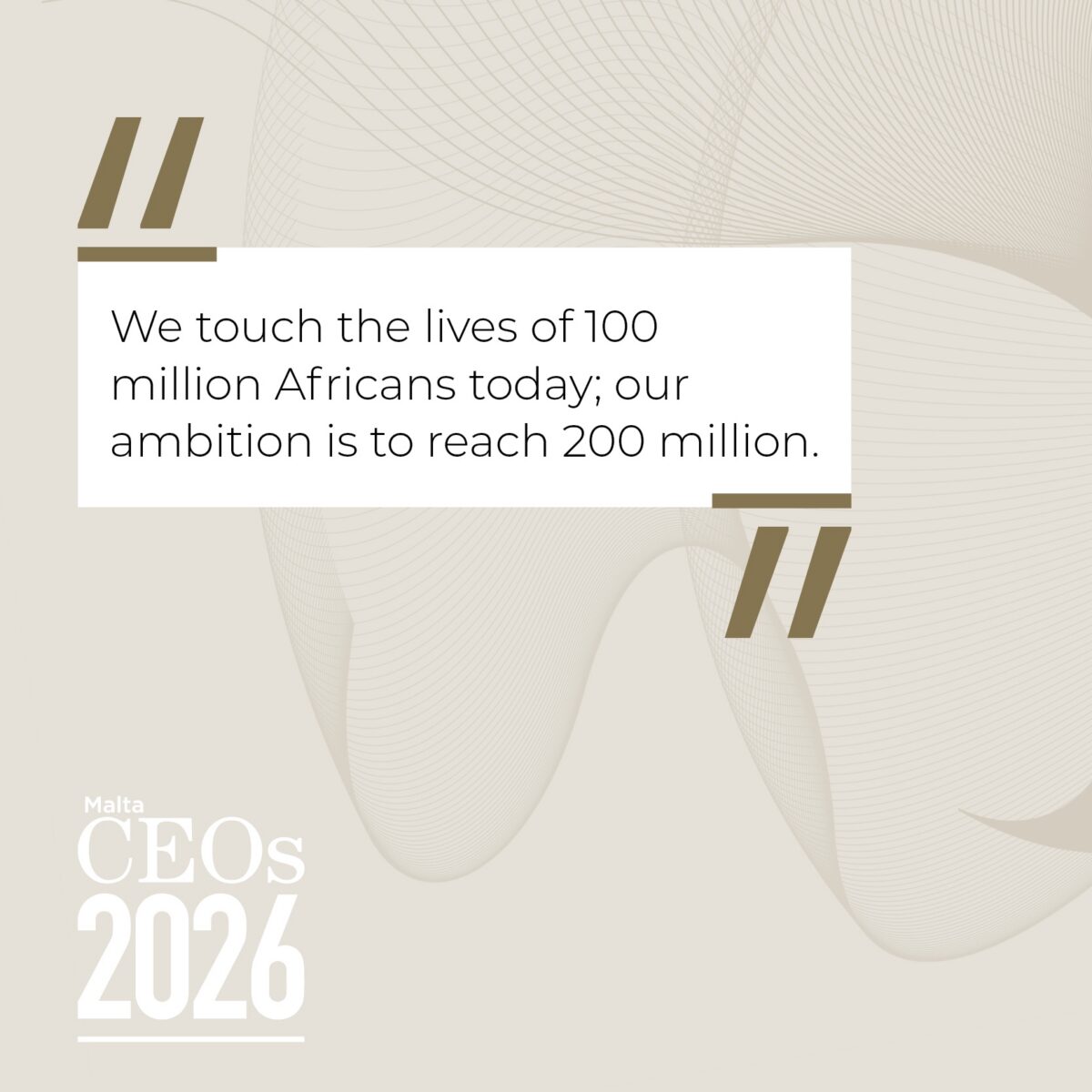
What motivates Albert most, however, is the human dimension. “We currently employ 30,000 people, and by the end of the fund, we are aiming for 100,000. In addition, we touch the lives of 100 million Africans today; our ambition is to reach 200 million. That is what drives us.”
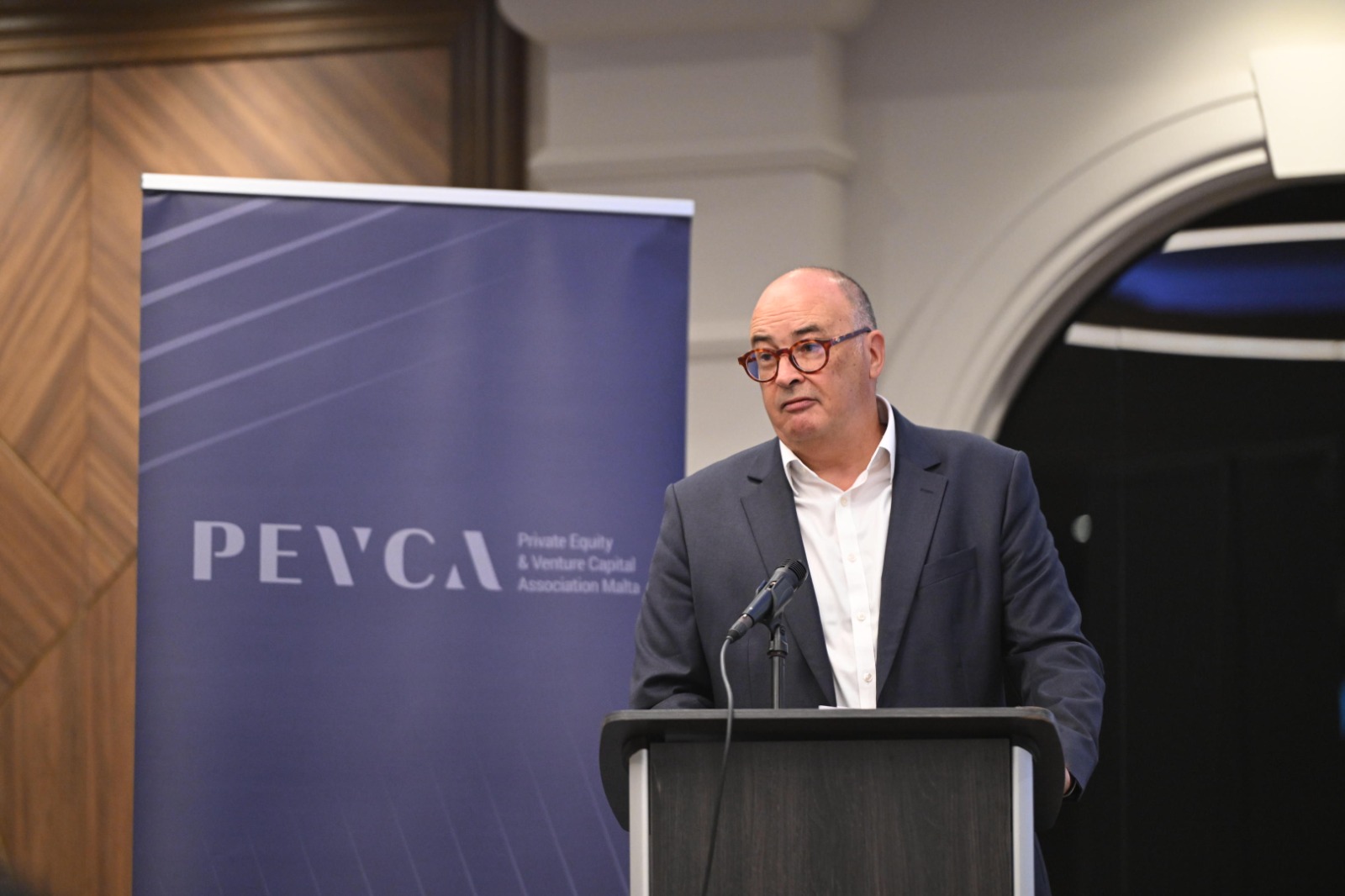
Thinking further ahead, Albert believes private equity is entering a golden era and that Malta is ideally placed to become a hub for the industry, thanks to its strong regulator, competitive service providers and strategic location. As a leader in the local financial sector, Albert supports Malta’s development through his role with the Malta Private Equity and Venture Capital Association (PEVCA) and by promoting the jurisdiction alongside entities like FinanceMalta.
Albert ends with a challenge to Malta’s business community: “Companies here need to think bigger, bolder and more ambitiously. The pending subject is for Maltese firms to expand abroad, conquer new regions and become truly international.”
This article is part of the serialisation of 50 interviews featured in MaltaCEOs 2026 – the sister brand to MaltaCEOs.mt and an annual high-end publication bringing together some of the country’s most influential business leaders.
‘Greed harms businesses more than anything else’ – Wolfgang Tweraser
The TW Consulting & Trade Ltd CEO believes Malta has much more to offer: ‘It could be like a little ...
‘We can’t promote tourism without agriculture’ – Malta Food Agency CEO Brian Vella
‘I envision having fewer farmers, but more productive ones.’
‘Not everything can be taught through textbooks’ – MUHC CEO Chris Schinas
‘I see my role as using the university’s name, its facilities and its resources to build a successful commercial arm.’
‘Retention is the new recruitment’ – HR Plus Managing Director Adrian Buttigieg
‘Starting from the ground up teaches you to value every team player.’
