


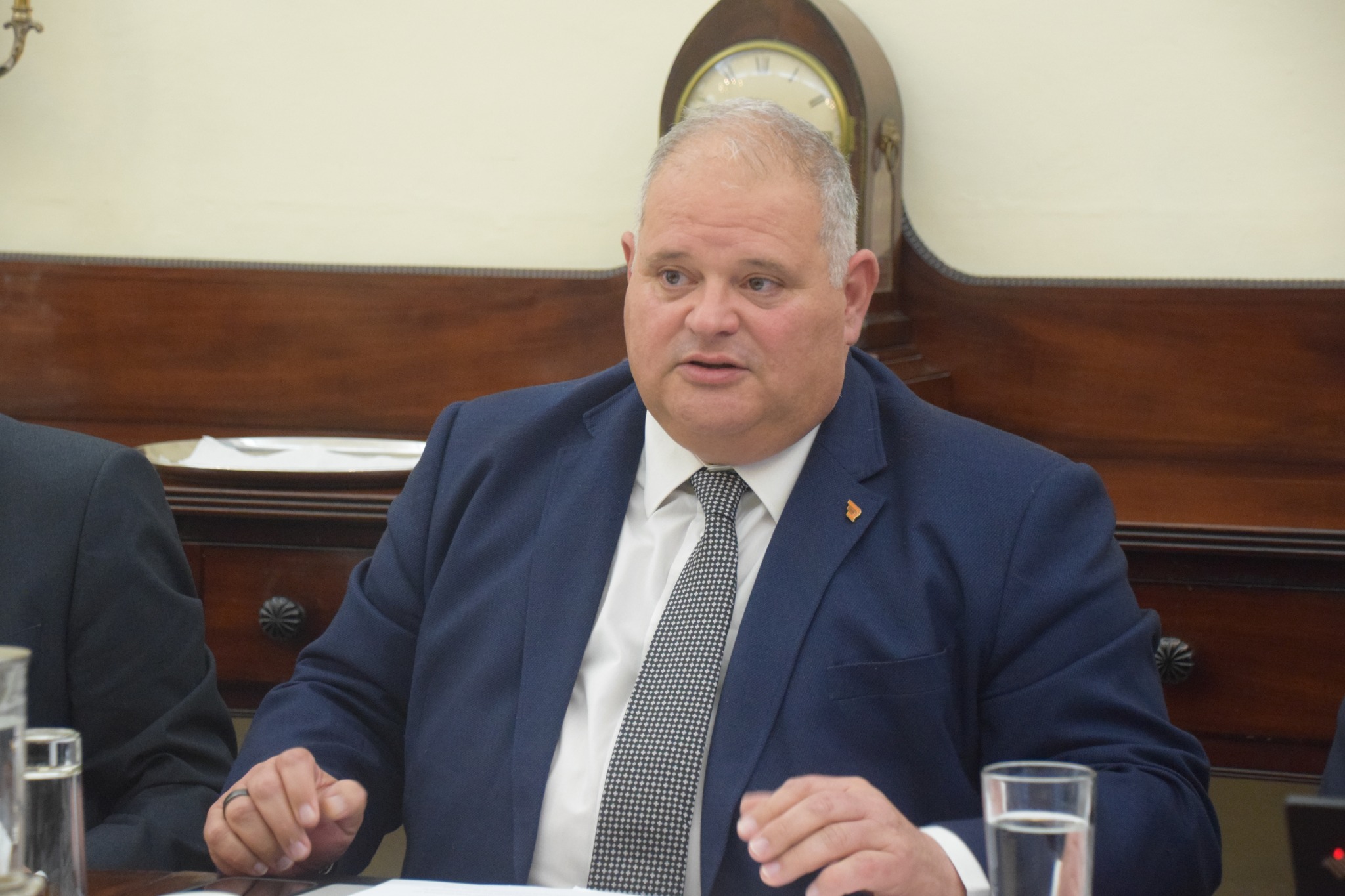
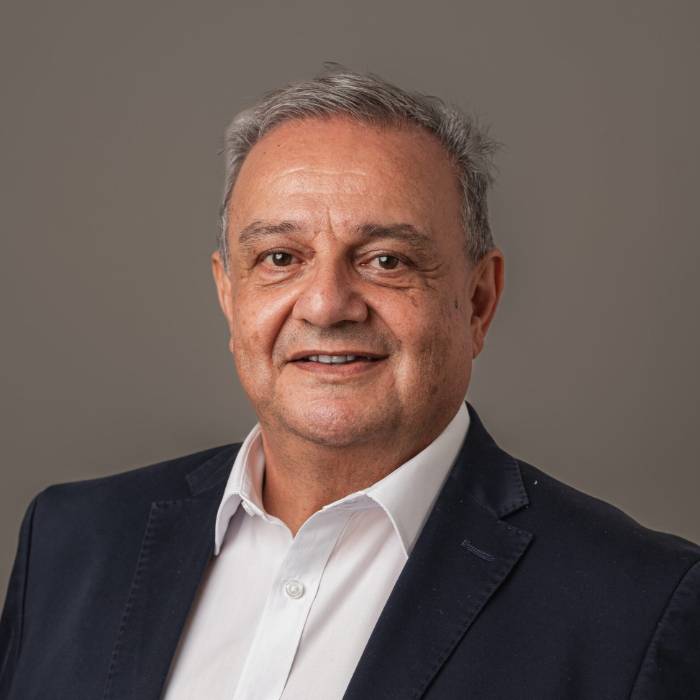
William Spiteri Bailey has called for “courage”, reform and long-term leadership as he warned that Malta’s economic model has reached “a critical juncture”.
Addressing Robert Abela and Alex Borg before they faced off in a debate organised by The Malta Chamber ahead of the general election, the President of The Malta Chamber said the country faces a defining moment that will determine whether it continues reacting to immediate challenges or embraces a long-term vision centred on sustainability, productivity and institutional reform.
“The election that lies ahead of us is a defining moment for Malta,” he said. “A moment where the country must decide whether it will continue to react to the challenges of today, or whether it is ready to embrace a long-term vision, reform, and leadership with a clear direction.”
While acknowledging Malta’s recent economic resilience, job creation and investment growth, Mr Spiteri Bailey cautioned that resilience alone is no longer sufficient.
“We can no longer rely on a model built on volume and short-term solutions, while productivity, infrastructure and quality of life are under pressure,” he said.
Calling for a shift in national priorities, he argued that the next legislature must focus on transforming Malta’s economic model “from volume to value” and from “short-termism to long-term planning”.
“The next legislature must be the legislature of the transition from volume to value, from short-termism to long-term planning, and from a quantity-focused economy to one of quality,” he stated.
Speaking on behalf of The Malta Chamber, Mr Spiteri Bailey urged the future Government to place productivity, competitiveness, good governance and institutional excellence at the centre of the national agenda.
Among the reforms proposed were stronger safeguards against conflicts of interest, tighter limits on positions of trust, greater scrutiny of major public contracts and increased transparency across public institutions.
He also called for a complete overhaul of Malta’s public procurement system to ensure that “quality, ethics and excellence are rewarded, and not simply the lowest price.”
On the business front, Mr Spiteri Bailey stressed the importance of continued investment in automation, digitalisation and AI to help Maltese companies improve productivity and remain competitive internationally.
“At the same time, we call for a new Government to continue to invest and support businesses in transforming their operations by embracing automation, digitalisation and Artificial Intelligence,” he said.
However, he emphasised that the country’s “greatest investment remains in people”, insisting that education reform can no longer be delayed.
He advocated for a skills-based education system focused on digital literacy, critical thinking, innovation and lifelong learning in order to prepare students for the economy of the future.
“This is the moment of courage. The moment of reform. The moment of transformative leadership,” he said.
“Malta has already shown that it is capable of being resilient. Now we must show that we are capable of building a stronger and more sustainable country for future generations.”


Two masterpieces, one remarkable instrument
Michael Pantalleresco explores the poetry, passion and brilliance of the clarinet in works by Mozart and Weber.
‘A setting we couldn’t be prouder of’: db CEO on Hard Rock Hotel’s new rooftop restaurant
Cyana’s head chef is Spiros Tzilis, a Greek chef who has worked at Michelin-starred restaurants.

‘AI might be faster and cheaper, but at what cost?’ – Aramis Capital MD
He warns that businesses risk sacrificing service quality, human judgement and accountability in their pursuit of greater efficiency through artificial ...
‘We’re already late’: Employers chief calls for cross-party mass transport agreement
Through cross-party agreement, the solution will endure beyond individual legislatures, he explains.
