


A recent ruling by the Munich District Court has sparked new questions about who – if anyone – owns content created by artificial intelligence.
In a landmark decision, the German court dismissed a copyright claim over AI-generated logos, holding that simply giving instructions to an AI system is closer to commissioning a designer than to creating a work yourself. In short – prompts alone are not enough.
Under German law, copyright depends on whether the final result bears the “creative imprint” of a human author’s personality. While human contribution may arise during prompting or later editing, the court stressed that such influence must be clear, objectively recognisable, and decisive in shaping the outcome. In this case, the prompts were considered too generic, meaning the output was attributed mainly to the AI system rather than to the plaintiff’s creative decisions.
The ruling reinforces a broader EU principle – that copyright protection requires human authorship.
For Maltese businesses increasingly relying on AI tools for branding, marketing copy and design, the question is: Where does Malta stand?
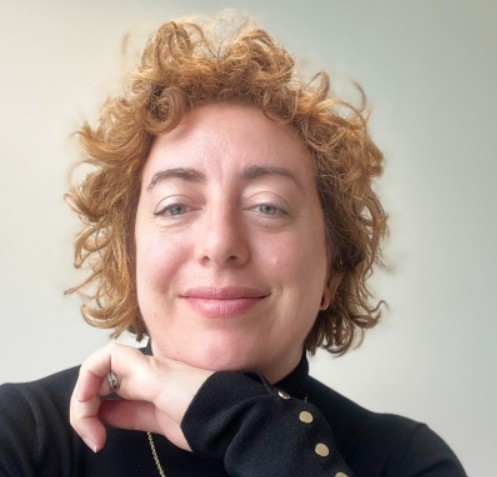
Lawyer Jeanine Rizzo who specialises in intellectual property law and art & antiquity law, explains that Malta’s framework reflects both its legal history and its EU alignment, and that “the position taken in Maltese law follows the civil/continental European system which favours the author. Our current copyright laws are fully aligned with the EU’s legislative acquis.”
In practical terms, this means Malta is far closer to Germany, France and Italy than to the UK and Ireland, which have specific provisions granting copyright to the person “by whom the arrangements necessary for the creation of the work are undertaken.”
Dr Rizzo is clear about the current standard: “One example is that the standard of originality in Malta is the same as the EU’s, that being that copyright requires the author’s own intellectual creation. This is a principle, which although worded differently in many other jurisdictions, reflects an important copyright principle: As things stand today, copyright requires human authorship.”

Similarly, Lawyer Sarah Demicoli, who works on the civil and commercial litigation cases of Gonzi & Associates, points to Malta’s Copyright Act, which "clarifies that the ‘author’ is defined as the natural person or group of natural persons who created the copyright-eligible work. Consequently, copyright protection presupposes human authorship, therefore excluding computer-generated work.”
In other words – purely AI-generated works would not qualify for copyright protection in Malta unless a natural person can show substantive participation in the creation process.
No specific AI copyright provisions – yet
While Malta has recently implemented EU-wide AI regulation – including transposing Regulation (EU) 2024/1689 through amendments to the Malta Digital Innovation Authority Act and the Data Protection Act – these measures do not address copyright ownership of AI-generated content.
Dr Demicoli notes: “Malta currently does not have any specific provisions governing work produced with the aid of artificial intelligence. Consequently, purely AI-generated works would not qualify for copyright protection unless a natural person can evidence, if challenged, that he or she did substantively participate in the creation process.”
At present, there are also no Maltese court cases dealing directly with AI and copyright.
However, EU case law provides guidance. The Court of Justice of the European Union (CJEU) has repeatedly confirmed that copyright applies only to works that are an “author’s own intellectual creation”, emphasising free and creative choices reflecting a human creator’s personality.
The real risks for Maltese businesses
For Malta’s creative sector – and for companies using AI for marketing, branding or content production – the implications are significant.
Dr Rizzo warns that the issue goes beyond legal theory: “Instead of grey areas I would say that there are a number of issues relating to the use of AI which should be causes for concern.”
She lists several practical risks – including the use of AI trained on illicitly obtained data, uploading confidential creative content into AI systems, and the reality “until this day that the output generated by AI is not capable of being protected by copyright.”
One fundamental question follows: “One would have to ask oneself therefore – have I asked AI to work on the creative input I uploaded, to be then returned with output I cannot claim copyright over?”
Dr Demicoli echoes the concern from a business perspective, saying that “if a business relies on AI to generate work fundamental to their brand, they may find themselves in a vulnerable position. For example, if they cannot prove human authorship, they cannot sue a competitor for ‘stealing’ their AI-generated marketing copy or website designs.”
The issue also affects commercial transactions.
“There would also be an issue in terms of licensing, as they cannot legally license or sell exclusive rights to content that you do not technically own under copyright law.”
This becomes particularly sensitive in agency-client relationships. If a creative professional delivers AI-assisted work, can the client truly acquire exclusive intellectual property rights? As Dr Rizzo puts it, “if a creative worker owns no copyright over their work, what control will that creative worker have over their work? And if the creative worker is hired by a third party to create something for them, is that third party expecting to own the rights over what is delivered to them? If AI was used, no intellectual property rights can be transferred to that third party client. Are creative workers willing to take these risks?”
What about trademarks?
One nuance concerns branding. Even if an AI-generated logo is not protected by copyright, it may still be eligible for trademark registration – provided it meets the legal requirements, particularly distinctiveness.
However, Dr Demicoli cautions that businesses must ensure such logos do not infringe third-party rights, and significant human input is strongly recommended to safeguard originality and distinctiveness.
The Munich ruling may be a German case, but its logic aligns closely with Malta’s EU-based framework. The message is straightforward – AI can assist creativity, but it does not replace human authorship in the eyes of copyright law.
For CEOs and business leaders, the issue is strategic as much as legal. AI can reduce costs and accelerate content production – but speed and convenience may come at the price of ownership and enforceability.
As AI tools become embedded in daily operations, companies may need to rethink workflows – ensuring meaningful human creative input, clear documentation of the creative process, and careful contractual arrangements with clients and suppliers.
Because in the end, if no one owns the work, who protects the brand?

Two masterpieces, one remarkable instrument
Michael Pantalleresco explores the poetry, passion and brilliance of the clarinet in works by Mozart and Weber.
‘A setting we couldn’t be prouder of’: db CEO on Hard Rock Hotel’s new rooftop restaurant
Cyana’s head chef is Spiros Tzilis, a Greek chef who has worked at Michelin-starred restaurants.

‘AI might be faster and cheaper, but at what cost?’ – Aramis Capital MD
He warns that businesses risk sacrificing service quality, human judgement and accountability in their pursuit of greater efficiency through artificial ...
‘We’re already late’: Employers chief calls for cross-party mass transport agreement
Through cross-party agreement, the solution will endure beyond individual legislatures, he explains.
