


The first televised debate between Prime Minister Robert Abela and Opposition Leader Alex Borg inevitably generated discussion about who performed better, who appeared stronger and who won the evening.
Yet from an economic perspective, this is not the most important question.
The real question facing Malta is much larger than a single debate or even a single election. It is whether Robert Abela or Alex Borg is better equipped to lead the country through what may be the most important economic transition Malta has faced in decades.
This is because Malta is no longer an economy searching for growth. We have already achieved growth. Our unemployment rate remains among the lowest in Europe. Businesses have expanded. Investment has increased. Economic activity has remained resilient despite multiple international shocks.
The challenge today is different.
Malta must now transition from an economy driven largely by quantity to one driven increasingly by quality. For years, economic success was measured through expansion. More workers, more businesses, more tourists and more investment generated strong economic outcomes. However, as the country becomes more developed, the limits of that model become increasingly visible. Infrastructure pressures, congestion, housing affordability concerns, labour shortages and environmental constraints all point towards the need for a new economic strategy.
This is where leadership becomes critical.
Research on political leadership suggests that voters increasingly evaluate leaders not simply on policy proposals but on competence, credibility, judgment and their perceived ability to manage complexity. In mature economies, leadership is no longer solely about setting direction. It is about navigating competing priorities, making difficult trade-offs and delivering results under conditions of uncertainty.
Viewed through this lens, Robert Abela entered the debate with a clear advantage. As Prime Minister, he was able to point towards an existing economic record. His message focused on continuity, stability and delivery. He projected confidence in Malta's economic performance and argued that the current trajectory remains the safest route forward.
For many businesses, this argument carries weight. Economic stability matters. Investors seek predictability. Employers value certainty. Governments that successfully manage economic shocks and maintain growth create confidence among households and businesses alike. Abela's performance reflected this strength.
However, economic history teaches us that yesterday's success does not automatically guarantee tomorrow's prosperity.
Many economies become victims of their own success when they fail to adapt to changing realities. Growth models that perform exceptionally well during one phase of development often require significant adjustment as countries mature. The policies that helped Malta grow rapidly may not necessarily be the policies that maximise productivity, innovation and competitiveness over the next decade.
This was the space that Alex Borg attempted to occupy.
Throughout the debate, Borg repeatedly emphasised future challenges rather than past achievements. He focused on quality of life, long-term competitiveness, governance improvements and the need to prepare Malta for a changing global economy. His approach was built around the argument that while Malta has achieved considerable economic success, it now requires a new vision capable of addressing emerging challenges.
Economically, this is a legitimate position.
The global economy is undergoing profound transformation. Artificial intelligence is reshaping industries. Digitalisation is altering labour markets. Competition for highly skilled talent is intensifying. Productivity is becoming increasingly important as demographic constraints begin to emerge across developed economies. Countries that fail to adapt risk stagnation regardless of previous success.
The most successful economies of the future will not necessarily be those with the largest populations or the fastest growth rates. They will be those capable of generating the greatest value from their available resources. Productivity, innovation, technology adoption and human capital development will increasingly determine economic prosperity.
This is precisely why the debate matters.
Not because it reveals who delivered the best political performance, but because it provides insight into how each leader understands Malta's future economic challenges.
Yet perhaps the most revealing aspect of the debate was what remained largely unanswered.
How exactly will Malta increase productivity over the coming decade?
How will we position ourselves competitively in a world increasingly shaped by artificial intelligence and digital technologies?
How will we attract more high-value industries while reducing pressure on infrastructure and natural resources?
How will economic growth translate into tangible improvements in quality of life?
How will Malta move from competing on volume to competing on value?
These are the questions that will define Malta's next economic chapter.
The next Prime Minister will inherit an economy that is successful but increasingly complex. The easy gains have largely been captured. Future progress will require smarter planning, stronger institutions, greater policy coordination and an unwavering focus on productivity and competitiveness.
This is why leadership matters more than ever.
Malta does not simply need a leader capable of sustaining growth. It needs a leader capable of transforming growth into long-term prosperity.
The first debate offered voters two distinct leadership propositions. One built around continuity, experience and delivery. The other centred on renewal, reform and future transformation.
Ultimately, the election will not be decided by who won a debate.
It will be decided by who convinces the country that they can successfully lead Malta through its next economic transition.
And that challenge is far greater than winning an argument on television. It is about shaping the economic future of a nation that must now move beyond growth and towards value, productivity and sustainable prosperity.

Six workforce indicators every CEO should be tracking
Workforce data can offer CEOs an early indication of emerging business challenges.
Silvano Azzopardi appointed to Board of Directors of Global Legal Entity Identifier Foundation
GLEIF had been set up and tasked with developing a universal identifier for legal entities involved in financial transactions.
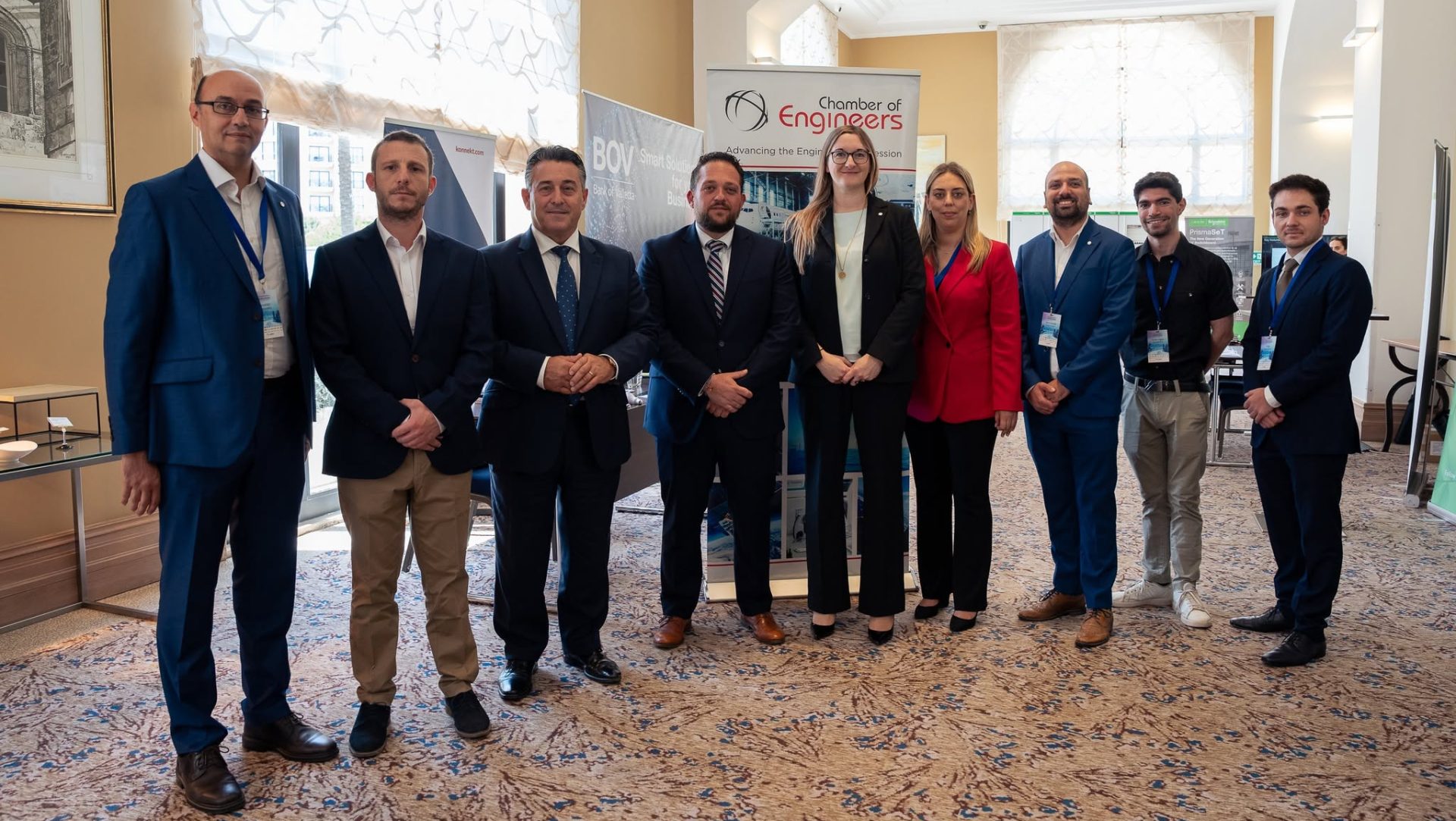
Engineering leaders urged to drive innovation responsibly as Chamber of Engineers looks to the next decade
A recent conference brought together 27 speakers from across the public and private sectors, academia and industry.

Why continuous learning and development has become a leadership imperative
Regulatory change and technological disruption are amongst the things that have transformed leadership into a discipline that requires constant development.
