


By any standard measure, networking is considered part of the job. Yet for working parents, especially those with young children, the way business networking is traditionally organised may be doing more harm than good.
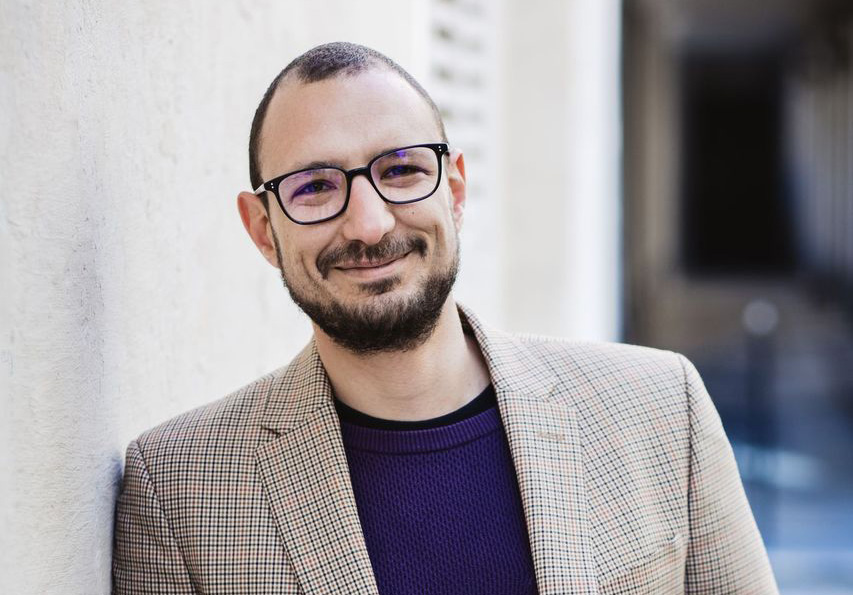
That’s the argument put forward by Mark Debono, founder of Systemato, a full-service digital agency, who recently shared a candid reflection on evening networking events, and who they exclude.
“I’m gonna say something which might sound like a hot take for any men reading this, but almost certainly is a most lukewarm take for women and/or mothers,” Mr Debono says.
“Networking events in the evening are a punishment for working parents.”
Mr Debono is careful to say he is not seeking sympathy, nor trying to turn his family life into a business talking point.
“I don’t talk about this much, because my family is my business, and I don’t want to ‘score business points’ using the little ones, but I’m a father of 2 young’uns.”
Parenthood, he adds, is a choice.
“This is not a complaint, just a statement of fact. This is parenthood, we made our choices, we made our bed.”
But the issue, he argues, lies in how professional life continues to be structured as if parenting does not exist.
“When you organise a networking event in the evening, what you’re basically telling professional couples is: ‘OK, now you two get to have an argument over who goes to hobnob over wine and canapes, and who gets a massive headache minding two kids, making sure they take their bath, eat their dinner, and sleep some time before midnight.’”
And this burden does not fall equally.
“Which, sadly, usually, is often the woman in the relationship.”
Mr Debono is aware that raising this point can invite accusations of stereotyping, but he insists this is not conjecture.
“Shock horror sexist talk you might say, but this is not just me talking. This is women talking.”
He recalls commenting to his wife and a female colleague after attending an evening networking event that felt oddly homogeneous.
“I commented that an evening networking event I went to was very much like a metal concert, except in all-blue suits – a total sausage fest. And both women told me, ‘Ħeqq Mark, where do you think the women were – mhux at home watching the men’s kids?’”
For Mr Debono, the contradiction is obvious. If networking is part of work, why is it routinely scheduled outside working hours?
“Listen, networking is work, no? ‘Work’ is right there in the name, correct?”
His proposal is simple: bring networking back into the working day.
“So, do it during working hours, when the kids are at childcare or school, and when we’re supposed to be working.”
He questions why business culture continues to normalise late-evening professional obligations, when many organisations publicly advocate for work-life balance.
“I think we all agree in theory at least that we shouldn’t be working at 21:00 (unless our job is shift based or in catering, healthcare, emergency services etc etc). So why not lead by example?”
Mr Debono even has a format in mind.
“Speed networking lunch hour, from 12:00 to 13:00 exactly, a quick healthy bite to eat, pleasantries exchanged, business cards duly distributed, QR codes snapped, an express espresso, and back to your desk or to pick up or meet the kids after school.”
The payoff, he suggests, is both logistical and relational.
“So you can do dinner time and bath time and actually talk to your partner before you collapse into bed for an hour, until the toddler wakes up with a bad dream.”
“Would that be so horrible?”
As an addendum, Mr Debono notes that the challenge is even greater for those without a partner to share the load.
“My attention was drawn by a comment that I didn’t talk about single parents, who obviously have it at least doubly hard in this respect.”
In an time, where businesses increasingly speak about inclusion, flexibility, and wellbeing, Debono’s argument raises a simple but uncomfortable question:
Who is excluded by the way we do business – and how much talent never makes it into the room because the room opens at the wrong time?

Farsons names Alistair Martin Haber as Chief Digital and Technology Officer
He brings more than 25 years of international experience in digital transformation, infrastructure modernisation and cloud strategy across enterprise environments
Matthew Ellul Sullivan assesses how Middle East war could impact Malta
He said that Malta could be negatively impacted if the closure of the Strait of Hormuz results in fewer vessels ...
MedservRegis Co-CEO: Disruption to Middle East operations minimal, no evacuation required
Olivier Bernard says the group’s operations remain largely unaffected and there is currently no need to evacuate staff.
IZIGROUP: From market leadership to international ambition
Over the past few years, IZIGROUP has been 'methodically laying the groundwork for international growth,' says Founder and CEO Johann ...
