


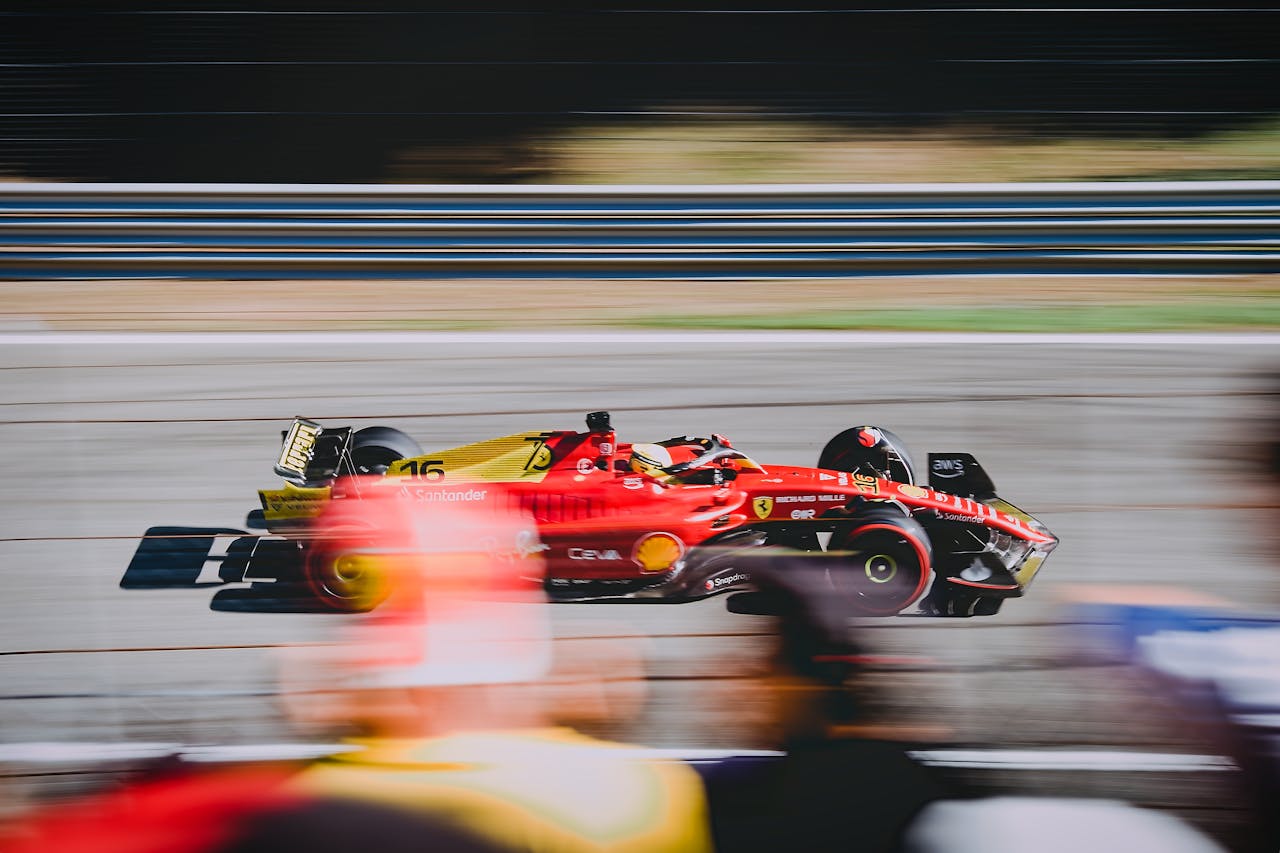
Investor Paul Grech has drawn attention to a powerful leadership lesson that did not emerge from a boardroom or a strategy offsite, but from an unlikely exchange between elite motorsport and paediatric healthcare.
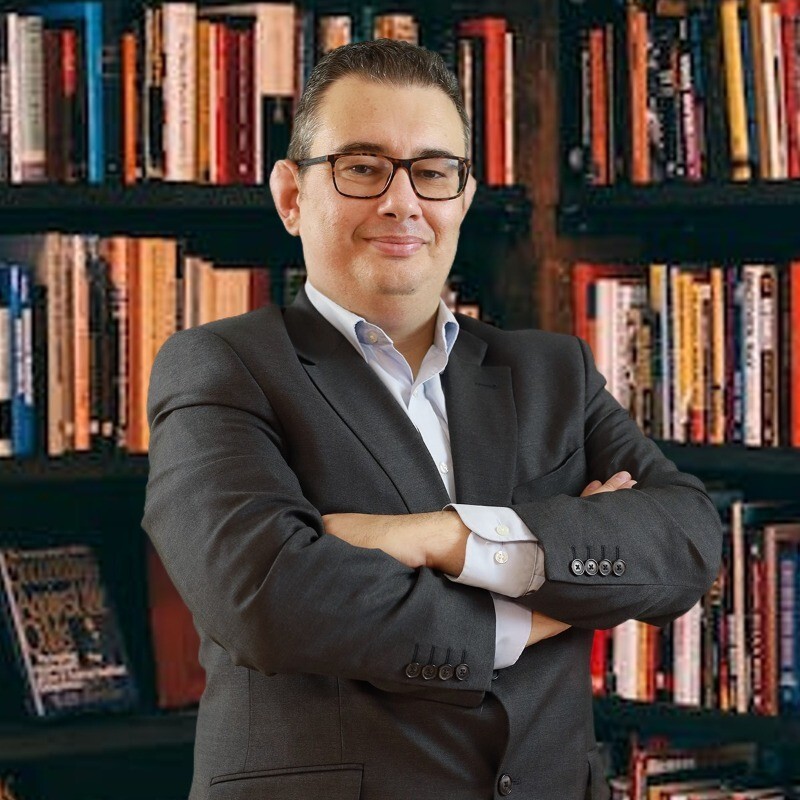
In a recent LinkedIn post, Mr Grech reflected on the value of deliberately looking beyond one’s own industry for insight, pointing to a case involving Great Ormond Street Hospital (GOSH) in London and the Ferrari Formula 1 Team.
The example is well documented in a case study published by the American Society for Quality, which details how GOSH benchmarked its surgery-to-ICU handover process against Ferrari’s Formula One pit-stop operations.
The problem
GOSH had long recognised that the transfer of critically ill children from cardiac surgery to intensive care was one of the highest-risk moments in patient care. Despite world-class clinicians and advanced equipment, studies showed that the journey from operating theatre to ICU was particularly vulnerable to error.
As the report explains, the medical teams were highly capable at reacting when something went wrong – but less structured when it came to anticipating failure .
This distinction would prove critical.
Why Ferrari?
The benchmarking exercise did not begin as a formal initiative. Two exhausted surgeons, watching Formula One after long operations, recognised a parallel between pit stops and surgical handovers.
As Professor Martin Elliott recalled: “The pit stop where they changed tyres and topped up the fuel was pretty well identical in concept to what we do in handover–so we phoned them up.”
What struck the GOSH team during their visit to Italy was not speed, but preparation.
The Ferrari pit crew sat around a table repeatedly asking:
“What could go wrong?”
“What are we going to do if it does go wrong?”
“How important is it if it goes wrong?”
Every risk was ranked, every role clearly defined, and one person always retained overall responsibility – the “lollipop man” – whose sole job was maintaining situational awareness.
Adapting, not copying
Ferrari did not provide a template for hospitals to replicate. Instead, GOSH adapted the underlying principles to its own environment.
The result was a new, structured handover protocol built around:
- clearer process mapping
- choreographed teamwork
- explicit ownership during each phase of the handover
- a named clinician responsible for the “big picture” at any given moment
The equivalent of the lollipop man became the anaesthetist, who coordinated the process until responsibility formally transferred to the intensivist.
Crucially, these changes did not rely on new technology or major capital investment. They relied on human factors, discipline, and clarity of roles.
The outcome
The impact was measurable.
According to the case study, the redesigned handover process led to a 66 per cent reduction in handover errors, breaking the link between technical mistakes and information omissions during patient transfer.
Before the new protocol, approximately 30 per cent of patient errors involved both equipment and information failures. After implementation, this figure fell to 10 per cent.
In his post, Mr Grech distilled the takeaway succinctly: innovation is not always about inventing something new, but about “having the curiosity to look elsewhere and the humility to adapt what you see”.
For CEOs, the message is clear. Competitive advantage does not always come from benchmarking against peers. Sometimes it comes from studying organisations that operate under extreme pressure, where failure is not an option – and asking how their disciplines might translate into your own context.
As the GOSH experience shows, the most powerful improvements can come not from technology or budget, but from mindset.
Rise in UAE expats seeking work in Malta, Kore Group CEO says
Charlotte Sant Portanier says they are applying for jobs in healthcare, catering and hospitality, but also more technical roles.
Graziella Grech takes on Executive Director role at FinPlus Europe
'It is truly an honour to be part of such a dynamic organisation.'
DaVinci Health Malta appoints Tiziana Lagana as Deputy Chief Operations Officer
'I look forward to continuing this journey.'
KonnektTalexio announces leadership transitions
Lara Camilleri and Mark Camilleri Gambin take the helm
